Keeping your jewelry sparkling is key to its beauty and life. Daily-worn items, like engagement rings, need regular cleaning. This removes dirt and grime that dulls them. In this guide, I’ll show you easy and effective home cleaning methods to keep your jewelry shining.
For example, check out David Alan Jewelry’s guide on cleaning. It explains the cleaning needs of different jewelry types. By following these steps, your jewelry will stay in top shape.
Key Takeaways
- Daily-worn jewelry should be cleaned regularly.
- Different types of stones require different cleaning methods.
- Simple household items can be used for effective jewelry cleaning.
- Regular cleaning at home can help maintain jewelry’s sparkle.
- Professional cleaning is recommended every six months.
Understanding the Basics of Jewelry Care
To keep your jewelry looking its best, it’s important to know the basics of care. Proper care keeps your jewelry looking great and lasts longer.
Why Regular Cleaning is Important
Cleaning your jewelry regularly is key. It removes dirt and grime that can dull your jewelry. Not cleaning can make your jewelry lose its shine and even damage it. Cleaning also helps spot problems early, like loose stones or worn clasps, so you can fix them quickly.
Common Jewelry Materials and Their Care Requirements
Different materials need different care. For example, gold and silver need gentle cleaning to avoid tarnish. Gemstones like diamonds and rubies can handle tougher cleaning. Knowing what your jewelry needs is crucial for keeping it in good shape.
| Jewelry Material | Care Requirements |
|---|---|
| Gold | Gentle soap and water; avoid harsh chemicals |
| Silver | Polish with a soft cloth; avoid exposure to sulfur |
| Diamonds | Use a soft brush and mild soap; ultrasonic cleaners are safe |
| Pearls | Wipe with a damp cloth; avoid chemicals and ultrasonic cleaners |
Knowing how to care for your jewelry helps keep it beautiful and long-lasting. Regular cleaning, proper storage, and timely maintenance are essential for keeping your jewelry in top condition.
Tools You’ll Need to Clean Jewelry

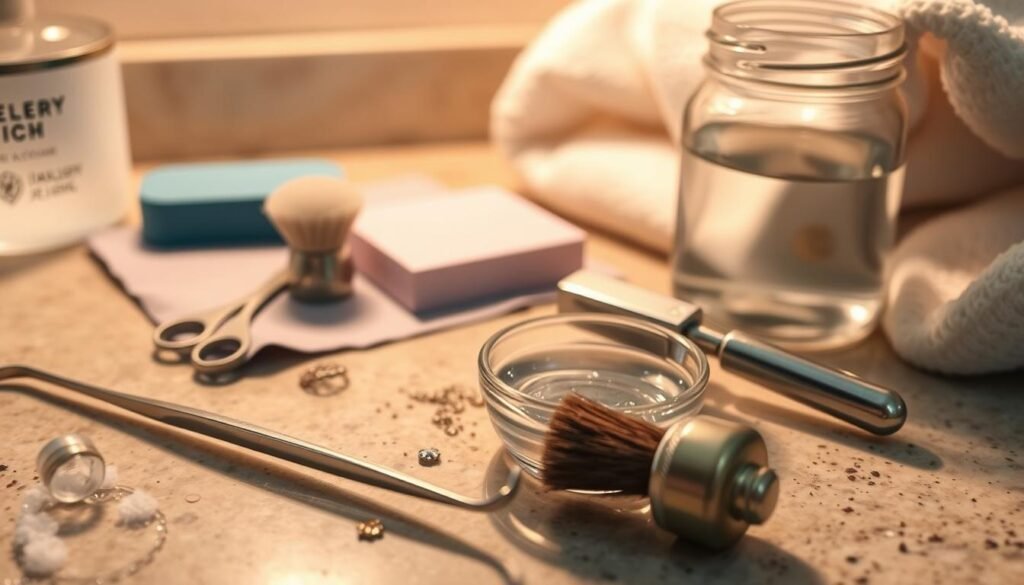
Before you start cleaning your jewelry, it’s important to have the right tools. This way, you won’t damage your precious pieces. Having the right supplies makes cleaning easier and more effective.
Essential Supplies for Home Jewelry Cleaning
You’ll need a few basic things that you might already have at home. These include:
- A soft, lint-free cloth to gently wipe down your jewelry
- Mild dish soap that is free of harsh chemicals
- Warm water for soaking and rinsing
- A soft-bristled toothbrush to gently scrub intricate details
For a deeper clean, consider using a jewelry cleaning solution made for your jewelry type.
Optional Tools for a Deeper Clean
For a deeper clean or for jewelry with complex designs, you might need more tools. These include:
- A jewelry cleaning brush with softer bristles for delicate areas
- A small bowl or container for soaking jewelry
- A microfiber cloth for drying and polishing
Having these tools and supplies ready will help you keep your jewelry looking great. Regular cleaning with the right tools will keep your jewelry sparkling and shiny.how-to-clean-makeup-brushes
How to Clean Different Types of Jewelry
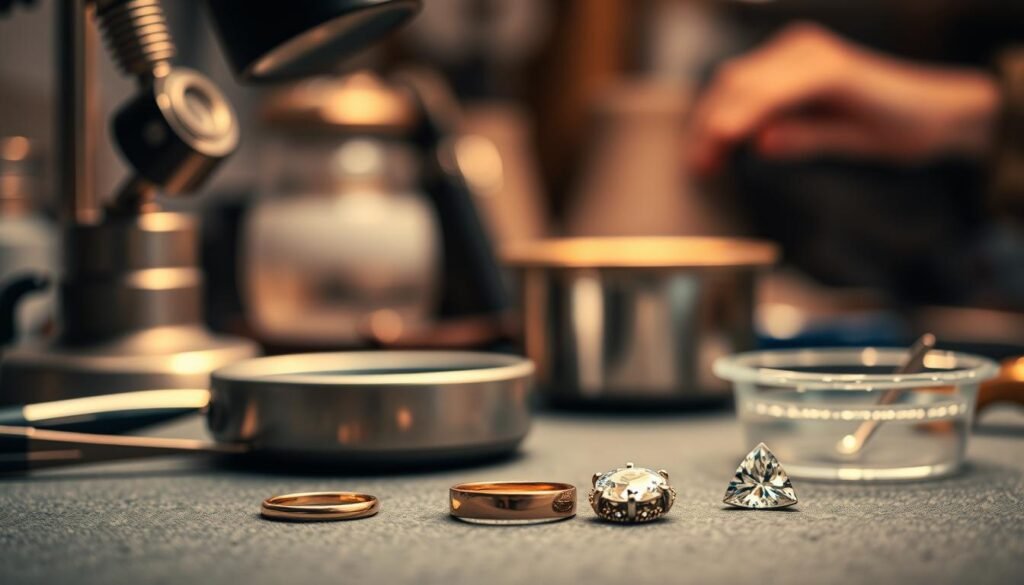
To keep your jewelry looking its best, it’s essential to clean it according to its material. Different types of jewelry need specific care to keep their sparkle and last longer.
Cleaning Precious Metals: Gold and Silver
Gold and silver jewelry can be cleaned with mild soap and warm water. For gold, a soft-bristled toothbrush can help remove dirt from intricate designs. Martha Stewart suggests using a mixture of equal parts water and white vinegar for a gentle shine.
For silver, a specialized silver polishing cloth can help remove tarnish. Avoid using harsh chemicals or abrasive materials that can scratch the metal.
Caring for Gemstones: Do’s and Don’ts
Gemstones like diamonds, rubies, and sapphires can be cleaned with mild soap and water. But, it’s crucial to avoid using ultrasonic cleaners for certain gemstones, as they can cause damage.
“Some gemstones, like emeralds and opals, require special care. It’s best to consult a professional jeweler for advice on cleaning these delicate stones.”
For most gemstones, a soft-bristled brush can help remove dirt from the setting. Avoid using harsh chemicals that can damage the stone or its setting.
Delicate Items: Pearls and Antique Jewelry
Pearls require extra care, as they can be damaged by harsh chemicals or abrasive materials. To clean pearls, gently wipe them with a soft, damp cloth. Avoid soaking pearls in water, as this can cause them to lose their luster.
| Jewelry Type | Cleaning Method | Special Care |
|---|---|---|
| Pearls | Gently wipe with a soft, damp cloth | Avoid soaking in water |
| Antique Jewelry | Consult a professional jeweler | Avoid harsh chemicals or abrasive materials |
| Gemstones | Mild soap and water | Avoid ultrasonic cleaners for certain stones |
Antique jewelry often requires professional care, as it can be fragile and valuable. If you have antique pieces, it’s best to consult a professional jeweler for advice on cleaning and maintenance.
Step-by-Step: Cleaning Your Jewelry at Home
Keeping your jewelry shiny is simple with a few steps. Cleaning at home is easy with the right tools and techniques. I’ll guide you to make your jewelry sparkle like new.how-to-clean-iphone-charging-port
The Soaking Method for Tough Dirt
For jewelry with stubborn dirt, soaking works well. Mix warm water and mild dish soap in a bowl. Then, soak your jewelry for 15-20 minutes.
Next, wipe off the dirt with a soft cloth. For detailed designs, a soft-bristled brush might be needed. Check out BHG’s home cleaning tips for more advice.
Using a Soft Brush for a Gentle Clean
A soft-bristled brush is perfect for delicate jewelry. Dip it in soapy water and gently scrub. Clean all parts but avoid too much pressure.
The Final Rinse: Ensuring Your Jewelry Shines
Rinse your jewelry under warm water to remove soap. Dry it with a soft cloth, focusing on crevices. For extra sparkle, use a jewelry polishing cloth.
| Jewelry Type | Cleaning Method | Special Care |
|---|---|---|
| Gold and Silver | Soaking and soft brush | Avoid harsh chemicals |
| Gemstones | Gentle scrubbing | Check gemstone durability |
| Pearls | Soft cloth wipe | Avoid acidic substances |
By following these steps, your jewelry will stay in top condition. Regular cleaning and care will keep it shining for years.
Homemade Cleaners: Natural Solutions

Using natural ingredients is a great way to clean jewelry without harsh chemicals. Many household items can be used to make gentle yet effective cleaning solutions for your precious items.
One simple method uses ingredients you might already have in your kitchen. For example, a mix of olive oil and lemon juice can clean jewelry gently. The lemon juice’s acidity breaks down dirt, and the olive oil protects the jewelry.
Olive Oil and Lemon Juice: A Gentle Clean
To make this cleaner, mix equal parts olive oil and lemon juice in a small bowl. Dip a soft cloth into the solution, gently rub the jewelry, and then buff it with a dry section of the cloth. This method works well for gold and silver pieces.
Another homemade cleaner uses baking soda. By making a paste with baking soda and water, you can remove tough stains from your jewelry.
Baking Soda Paste: Tough Stains No More
To make the baking soda paste, mix 1 teaspoon of baking soda with a few drops of water until it’s thick. Apply the paste to the stained area with a soft-bristled toothbrush, scrubbing in a circular motion. Rinse with warm water and dry well. This method is great for removing tarnish from silver jewelry.
These homemade cleaners keep your jewelry sparkling and are eco-friendly. By using natural ingredients, your jewelry care routine is both effective and sustainable.
Commercial Jewelry Cleaners: What to Consider
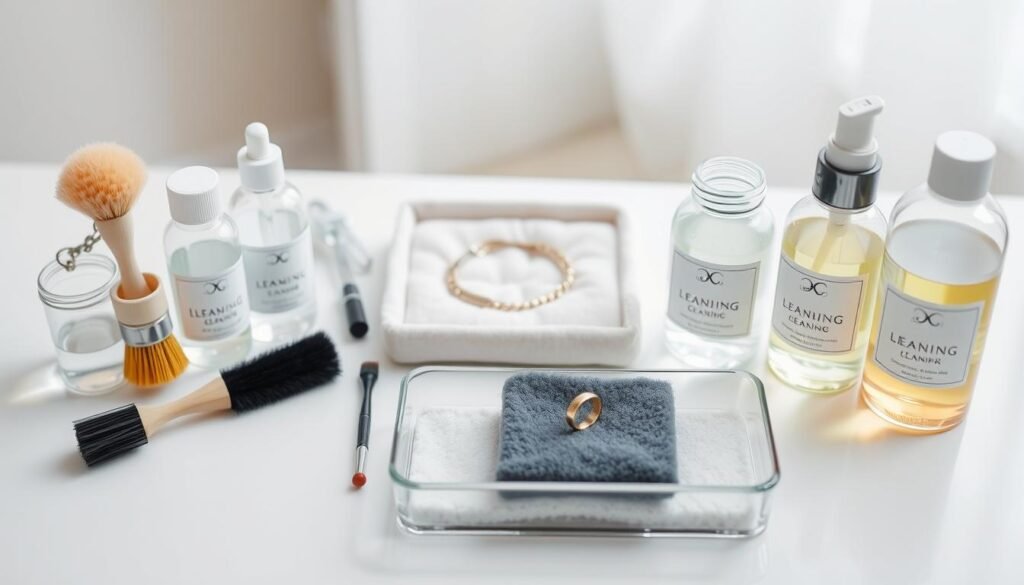
Looking for an easy way to clean your jewelry? Commercial cleaners are a good option. They are made to remove dirt and grime from different jewelry types. This makes cleaning easier and faster.
Pros and Cons of Store-Bought Cleaners
Store-bought jewelry cleaners have good points and not-so-good points. They are easy to find and often come with clear instructions. This helps you get professional results at home. Plus, many are safe for various jewelry materials.how-to-clean-silver
But, there are downsides too. Some cleaners can be too harsh and damage certain gemstones or metals. Also, check the ingredients. Some may not be good for the environment or safe for your skin.
| Pros | Cons |
|---|---|
| Easy to use | Potential harsh chemicals |
| Effective for various jewelry types | May not be eco-friendly |
| Readily available | Risk of damaging certain materials |
Recommended Brands to Try
Here are some top brands for commercial jewelry cleaners. Connoisseurs offers products for all kinds of jewelry. Weiman is another great choice for its effective yet gentle cleaners.
When picking a cleaner, read reviews and follow the instructions well. This ensures the best cleaning results. For more on jewelry cleaning, check out The Ultimate Guide to Jewelry Cleaning.
Maintaining Your Jewelry After Cleaning
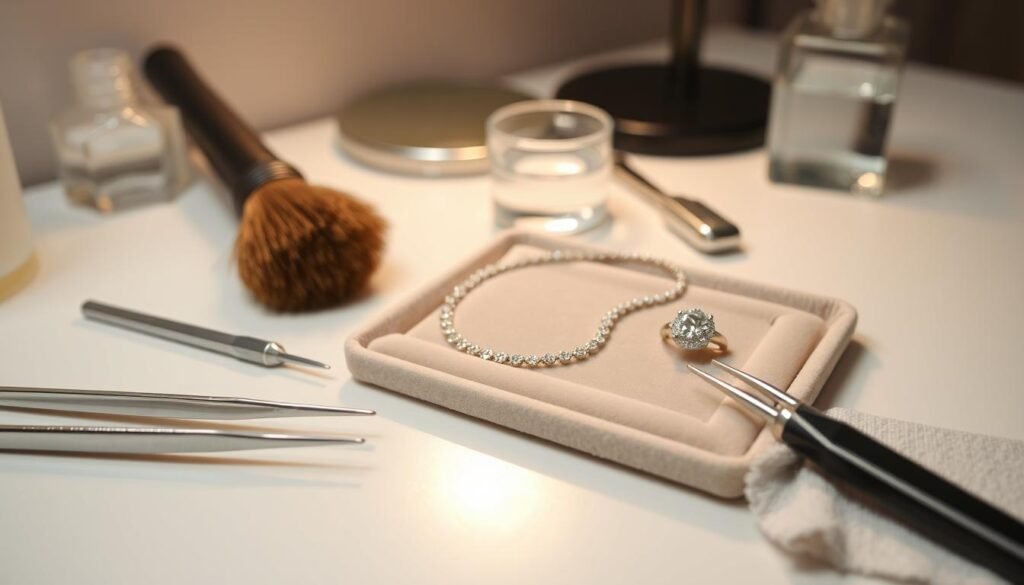
Keeping your jewelry in top shape after cleaning is key. It helps your pieces stay beautiful for special events or everyday wear.how-to-clean-oven
Proper Storage Tips to Keep Jewelry Pristine
Storing jewelry right is crucial to avoid damage and tangles. Here are some storage tips:
- Store each piece separately in a soft pouch or a lined box to prevent scratching.
- Keep your jewelry away from direct sunlight and moisture, which can cause tarnishing.
- Consider using a jewelry box with compartments and anti-tarnish lining.
For more detailed guidance on jewelry care, you can visit Simone Walsh’s Jewellery Care and Cleaning.
Regular Maintenance Routines
Regular care is essential to keep your jewelry looking great. This includes:
- Regularly inspecting your jewelry for signs of wear and tear.
- Cleaning your jewelry periodically to prevent grime buildup.
- Having your jewelry professionally checked and serviced if necessary.
By sticking to these simple maintenance routines, you can make your jewelry last longer and stay shiny.
Remember, “A well-maintained piece of jewelry is not just a treasure; it’s a testament to the memories and moments it has witnessed.” –
When to Seek Professional Help

Not all jewelry can be cleaned or repaired at home; sometimes, expert attention is needed. While many pieces can be kept clean with simple methods, complex or delicate items need special care.
Signs Your Jewelry Needs Expert Attention
If you see any of these signs, it’s time to get professional help:
- Intricate designs that are hard to clean
- Gemstones that are loose or damaged
- Antique or heirloom pieces that need special care
- Jewelry with complex mechanisms, like watches or musical jewelry
Ignoring these signs can cause more damage or wear down your jewelry. A professional jeweler has the right tools and knowledge to fix these problems.how-to-clean-tv-screen
Finding a Trustworthy Jeweler
To find a reliable jeweler, follow these tips:
- Ask friends or family for recommendations
- Check online reviews and ratings
- Look for jewelers certified by organizations like the Gemological Institute of America (GIA)
- Visit the jeweler in person to see their professionalism and expertise
A trustworthy jeweler will give you a clear idea of your jewelry’s condition. They will also suggest the best repairs or cleaning methods.
Jewelry Repair: DIY vs. Professional Services
Many of us wonder if we should fix jewelry ourselves or get a pro to do it. Jewelry is more than just something valuable; it’s often a family treasure or a personal keepsake. Choosing how to fix it can be tough.
First, figure out what kind of repair your jewelry needs. Some fixes are easy to do at home. But others need a pro’s touch.
Basic Repairs You Can Do at Home
For small problems, fixing jewelry yourself can save money and be easy. Here are some simple repairs you can try at home:
- Reattaching a loose stone with jewelry adhesive
- Polishing the jewelry to remove minor scratches
- Adjusting the clasp or chain
These tasks need just a few tools and some basic knowledge. But be careful not to mess up the jewelry more.
Knowing When to Leave It to the Pros
While DIY fixes are tempting, some repairs are better left to the experts. If your jewelry is complex, made of precious materials, or holds deep meaning, get a pro’s help.
Professional jewelers have the skills, experience, and tools to fix jewelry right. They can also advise on the best way to fix your piece.
In short, while some repairs are easy to do at home, knowing when to get a pro is key. This ensures your jewelry is fixed right and safely.how-to-clean-white-shoes
Conclusion: Keeping Your Jewelry Sparkling
Learning the basics of jewelry care is key to keeping your pieces beautiful and lasting. By following the steps in this guide, you can enjoy your jewelry for years. It will always shine brightly.
Benefits of Proper Jewelry Care
Proper care makes your jewelry look better and prevents damage. Regular cleaning keeps it shining like new. It’s a simple way to keep your jewelry in top shape.
Tips for a Lasting Shine
To keep your jewelry sparkling, store it right and avoid harsh chemicals. Clean it often. These simple steps will help your jewelry stay bright and beautiful for a long time.