Brass is a timeless and elegant material used in many household items, from decorative fixtures to musical instruments. It can tarnish over time, losing its shine. Regular cleaning is essential to maintain its shine and extend its lifespan. A study found that proper maintenance can increase the longevity of brass items by up to 50%. To keep your brass items looking their best, it’s crucial to use the right cleaning techniques.
For instance, you can create a cleaning mixture using half a lemon’s juice mixed with 1 tsp. baking soda, as suggested by brass cleaning experts. By following the right tips and tricks, you can restore your brass items to their original shine. In this article, we’ll explore effective methods for cleaning brass and maintaining its beauty.
Key Takeaways
- Use a mixture of lemon juice and baking soda to clean brass
- Avoid touching brass often to prevent tarnish
- Clean brass items monthly or yearly depending on usage
- Use a soft cloth to prevent scratches
- Follow manufacturer’s instructions for commercial brass cleaners
Understanding Brass: What You Need to Know
Brass is more than a shiny metal; it’s a mix of metals with many uses. To keep brass looking great, knowing what it’s made of and how it’s used is important.
The Composition of Brass
Brass is mainly made of copper and zinc. The mix of these metals changes, creating different types of brass. For example, more copper makes brass reddish, while more zinc makes it brighter and stronger.
| Type of Brass | Copper Content (%) | Zinc Content (%) | Properties |
|---|---|---|---|
| Red Brass | 85 | 15 | High ductility, excellent for cold working |
| Yellow Brass | 70 | 30 | Strong, corrosion-resistant, good for general use |
| Naval Brass | 60 | 39.25 | High strength, resistant to corrosion, used in marine hardware |
Common Uses of Brass
Brass is loved for its strength, beauty, and low friction. It’s used in musical instruments, decorative fixtures, and plumbing. Its resistance to corrosion and easy machining make it popular among makers.
Why Regular Cleaning is Important
Cleaning brass often is key to keeping it shiny and preventing tarnish. Dirt, grime, and oils from skin can dull brass. Regular cleaning stops tarnish buildup and keeps brass looking new.how-to-clean-a-mattress
In summary, knowing about brass’s makeup, uses, and care is vital for its shine. By understanding its properties and proper care, you can enjoy brass’s beauty for many years.
Essential Supplies for Cleaning Brass
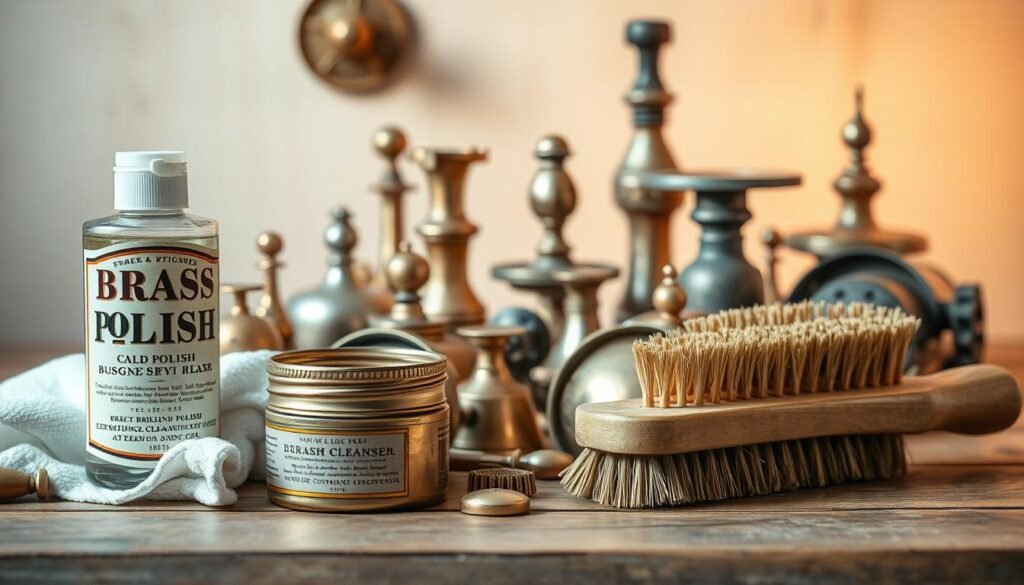
To make your brass shine, start by gathering the right cleaning supplies. You’ll need to know what tools and gear are best for the job.how-to-clean-makeup-brushes
Cleaning Agents
The right cleaning agents are key to a sparkling brass. Here are some top choices:
- Vinegar and baking soda: A natural mix that’s safe and effective for removing tarnish.
- Commercial brass cleaners: Special products found at most hardware stores.
- For more info on using these cleaners, check out Barkeepers Friend.
Tools You’ll Need
Choosing the right tools is important to avoid damaging your brass. Here are some must-haves:
- Soft cloths: These are gentle and great for polishing and wiping down.
- Soft-bristled brushes: Perfect for getting into tight spots or designs.
- Microfiber cloths: Ideal for drying and buffing to a high shine.
Protective Gear
Don’t forget about protective gear. It keeps your skin and eyes safe from harsh chemicals. Use:
- Gloves: To avoid skin irritation from cleaning solutions.
- Safety goggles: Protect your eyes from splashes or spills.
With the right cleaning agents, tools, and protective gear, you’re ready to clean your brass items effectively.how-to-clean-iphone-charging-port
Simple Methods for Cleaning Brass
Cleaning brass doesn’t have to be hard. Here are some easy ways to do it. You can use different methods, each with its own benefits. Whether it’s a brass fixture or a decorative piece, the right cleaning method makes a big difference.
Vinegar and Baking Soda Solution
Using vinegar and baking soda is a green and effective way to clean brass. The acid in vinegar breaks down tarnish. Baking soda is a gentle scrubber.
- Mix 1 tablespoon of baking soda with 1 cup of vinegar to make a paste.
- Use a soft cloth to apply the paste to the brass.
- Gently rub in circles, then rinse with warm water and dry well.
Benefits: This method is safe and good for the environment. “It’s a simple yet effective way to restore the shine to your brass items,” says a cleaning expert.
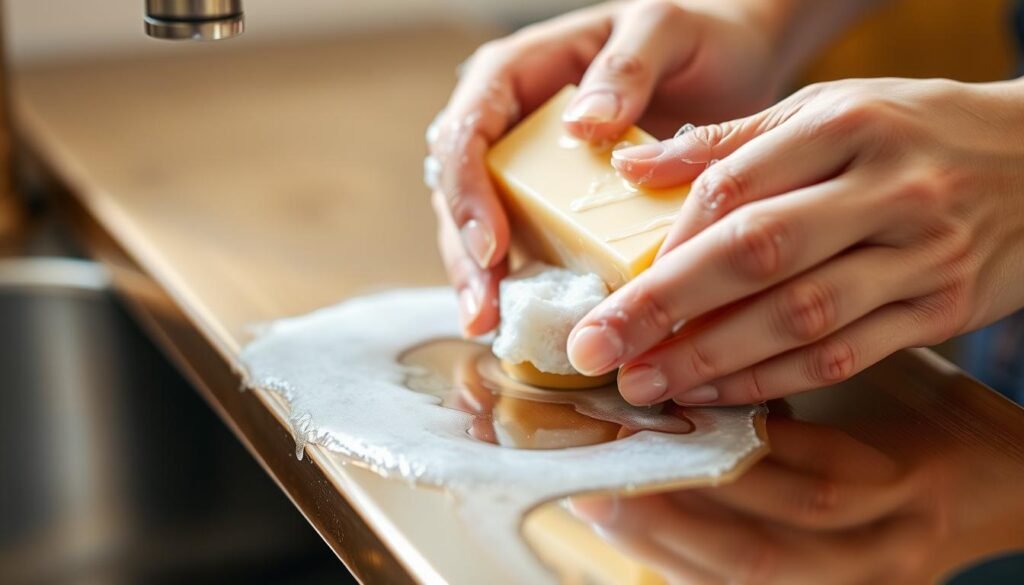
Soap and Water Technique
For lightly tarnished brass, soap and water work well. This method involves washing the brass with mild soap and warm water.
- Mix a few drops of mild soap with warm water.
- Dip a soft cloth into the solution, wring it out, and wipe the brass.
- Rinse the cloth and wipe the brass again to remove soap.
- Dry the brass with a clean, dry cloth to avoid water spots.
As
“Regular cleaning with soap and water can help maintain the appearance of brass fixtures and prevent the need for more aggressive cleaning methods.”
Commercial Brass Cleaners
For tough tarnish or detailed designs, commercial brass cleaners are handy. These products are made to clean brass without harming its finish.how-to-clean-silver
- Choose a cleaner that matches your brass item’s finish.
- Read the product label carefully.
- Apply the cleaner with a soft cloth, rub gently, and buff to shine.
Caution: Always check the label to make sure the product is safe for your brass item. Follow the instructions to avoid damaging the finish.
Step-by-Step Guide to Cleaning Brass Fixtures
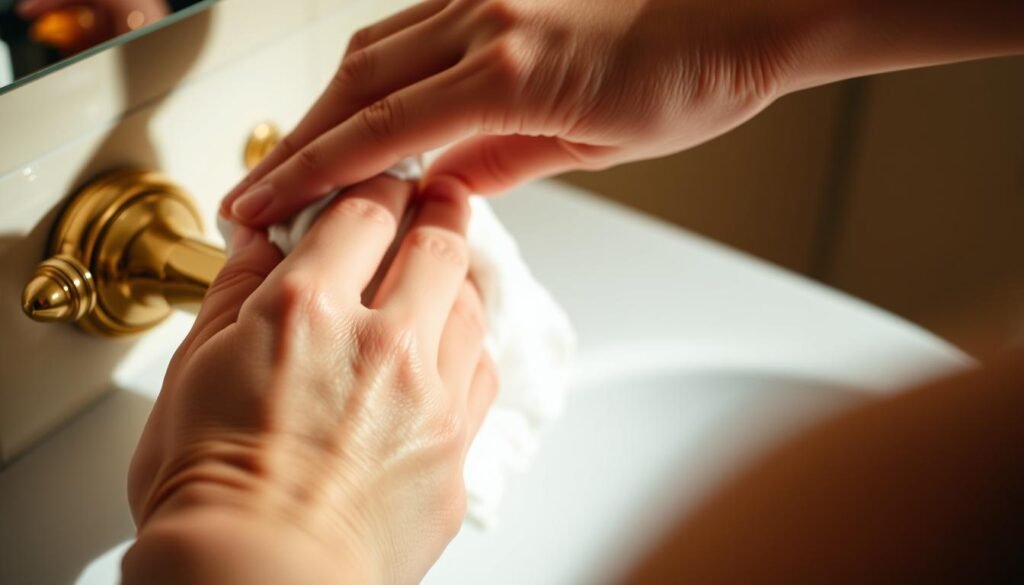
Cleaning brass fixtures requires a few important steps for a shiny finish. Start by preparing the area, then clean, and end with rinsing and drying. This method ensures the best results.how-to-clean-oven
Preparing the Area
Before you begin cleaning brass fixtures, prepare the area to avoid damage or mess. Clear the space of items that could get in the way or be damaged. Cover the floor and nearby surfaces with cloths or plastic sheets to protect them from spills.
Cleaning Process
The cleaning process can vary based on the tarnish level and fixture finish. A mix of vinegar and baking soda is often effective. Apply the paste with a soft cloth, rubbing in a circular motion. For tough tarnish, let the paste sit before rinsing.
Experts say, “Regular cleaning prevents tarnish buildup and keeps brass fixtures shiny” (Click Metal).
Rinsing and Drying
After cleaning, rinse brass fixtures with warm water to remove any solution or residue. Dry them well to avoid water spots. Use a soft, dry cloth to buff the brass, removing moisture and enhancing shine.
Regular rinsing and drying brass fixtures keeps them looking great. Remember, regular cleaning and care are key to maintaining brass beauty.how-to-clean-tv-screen
Restoring Dull Brass: Advanced Techniques
Even the most tarnished brass can shine again with the right steps. Restoring dull brass needs the right techniques, tools, and patience.
Polishing with a Soft Cloth
Polishing with a soft cloth is a simple yet effective method. It’s gentle and safe for intricate designs. Start by applying a small amount of brass polish to the cloth, not directly to the brass.
Gently rub the cloth in circular motions over the brass. This ensures even coverage. For detailed areas, use a soft-bristled brush to apply the polish.
Tips for Polishing:
- Use a microfiber cloth for the best results.
- Avoid using too much pressure, which can scratch the brass.
- For stubborn tarnish, repeat the process a few times until you achieve the desired shine.
Using a Dremel for Detailed Work
For intricate designs or hard-to-reach areas, a Dremel is very effective. It allows for precise polishing in detailed sections.
Attach a soft polishing wheel or a felt tip to your Dremel. Apply a small amount of brass polish. Gently work on the detailed areas, avoiding too much pressure.how-to-clean-white-shoes
Precautions:
- Always wear protective eyewear and a dust mask.
- Work in a well-ventilated area to avoid inhaling dust or polish fumes.
- Keep the Dremel at a low speed to maintain control and avoid damage.
Applying a Protective Coating
After restoring your brass, apply a protective coating to keep it looking great. There are many brass waxes and lacquers available. Apply them to the cleaned and polished brass.
Use a soft cloth to apply a thin, even layer of the protective coating. Let it dry as instructed before handling the brass.
Benefits of Protective Coating:
- Reduces the need for frequent polishing.
- Protects against tarnishing and corrosion.
- Maintains the shine and appearance of the brass.
Preventative Measures to Maintain Brass
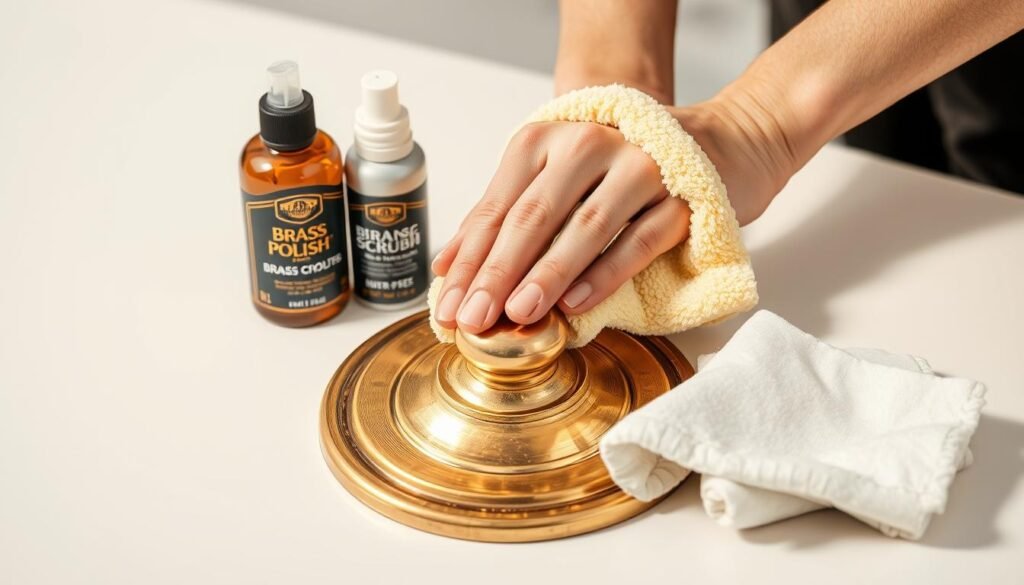
Keeping your brass items shiny is easy with a few simple steps. It’s not just about cleaning; it’s also about preventing tarnish. Regular care helps keep your brass looking great.
Regular Dusting
Dusting your brass items often is key. Dust can lead to tarnish, so dusting regularly is crucial. Use a soft, dry cloth to dust, focusing on details and crevices where dust builds up.
For delicate or intricate pieces, use a small, soft-bristled brush. This is great for items like brass figurines or decorative pieces with complex designs.
Avoiding Harsh Chemicals
When cleaning your brass, avoid harsh chemicals. Bleach or ammonia can damage it, causing tarnish or discoloration. Instead, use mild cleaners or homemade solutions like vinegar and baking soda.
“The key to maintaining brass is gentle care. Avoid harsh chemicals and abrasive materials that can scratch or damage the surface.”
Storage Tips for Brass Items
Proper storage is key to keeping your brass items in good condition. Store them in a cool, dry place, away from sunlight. Wrap them in a soft cloth or store in a protective case to prevent damage.
| Storage Method | Benefits |
|---|---|
| Wrapping in a soft cloth | Prevents scratching and tarnishing |
| Storing in a protective case | Provides extra protection against dust and damage |
| Keeping in a cool, dry place | Reduces the risk of tarnishing caused by moisture |
For extra protection, use anti-tarnish strips or silica gel packets. These absorb moisture and prevent tarnish.
By following these steps, you can keep your brass items looking their best. Regular dusting, avoiding harsh chemicals, and proper storage are all important. These steps help maintain the shine and beauty of your brass.
Troubleshooting Common Cleaning Issues
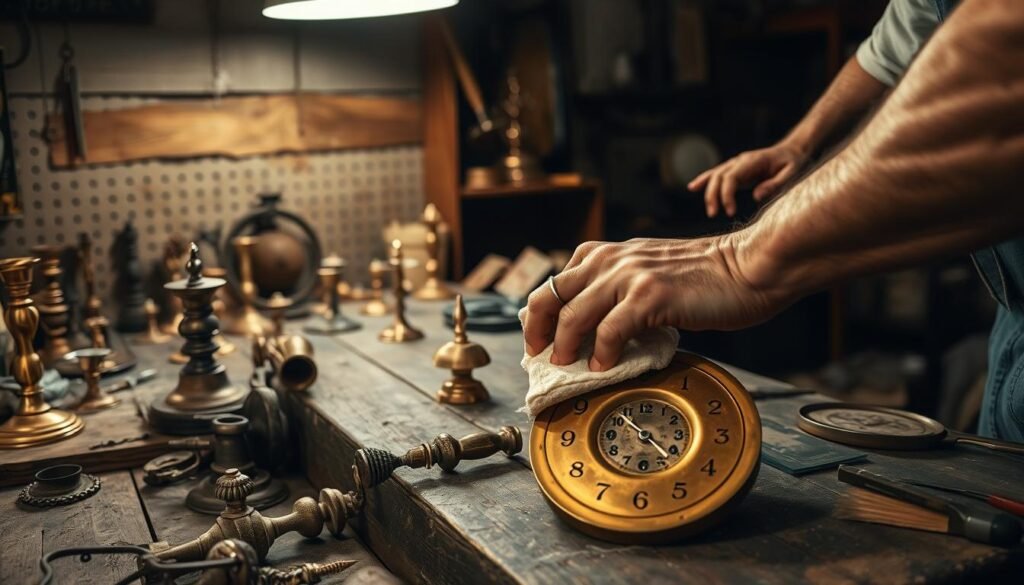
Even with proper care, brass can develop stubborn stains or tarnish. It’s important to know how to fix these problems to keep your brass items looking good.
Dealing with Stubborn Stains
Removing stubborn stains from brass can be tough. But, there are a few methods you can try. For example, a mix of vinegar and baking soda works well. Just mix 1 tablespoon of baking soda with 1 cup of vinegar, apply it to the stain, and let it sit for 30 minutes. Then, rinse with warm water and dry it well.
If the stain is really hard to get rid of, you might need a commercial brass cleaner. Always read the instructions first and test it on a small area to avoid damage. For more tips on cleaning brass, check out This Old House.
Handling Tarnished Brass
Tarnish on brass is caused by oxidation and can look bad. To remove it, use a gentle polish. Apply a small amount of polish to a soft cloth and rub it in a circular motion. For tricky spots, use a soft-bristled toothbrush.
After polishing, buff the brass with a clean, dry cloth. This removes excess polish and makes the brass shine. Regular polishing keeps your brass looking great.
| Method | Description | Effectiveness |
|---|---|---|
| Vinegar and Baking Soda | A natural solution for removing stains | High |
| Commercial Brass Cleaner | A specialized product for tough stains | Very High |
| Brass Polish | A gentle polishing technique for tarnish removal | High |
When to Seek Professional Help
At times, brass items need professional help, even with your best cleaning efforts. If you have a valuable or antique brass piece that’s badly tarnished or damaged, a professional restorer is the best choice. They have the skills and tools to fix it without causing more harm.
Also, if you’ve tried many cleaning methods and the problem still exists, getting professional help is a good idea. Experts can check your brass item and suggest the best solution.
Eco-Friendly Alternatives for Brass Cleaning

Cleaning brass doesn’t have to harm the environment. There are many eco-friendly methods you can use. As we become more aware of our impact, it’s key to find sustainable and effective ways to clean.
Natural Cleaning Solutions
Using natural cleaning solutions is a simple way to clean brass without harming the planet. A mix of lemon juice and baking soda works well. Lemon juice breaks down tarnish, and baking soda gently removes grime.
- Lemon juice: Acts as a natural acid to break down tarnish.
- Baking soda: Serves as a mild abrasive to remove grime.
- Vinegar: Can be used as a soak or mixed with salt for a more abrasive cleaner.
Benefits of Organic Cleaning Products
Organic cleaning products for brass are great for the environment and your health. They are better for the environment and safer than harsh chemicals. Organic products reduce the risk of toxic exposure and are biodegradable.
Some benefits include:
- Reduced environmental impact.
- Safer for human health.
- Biodegradable, reducing landfill waste.
DIY Eco-Friendly Brass Cleaner Recipes
Making your own eco-friendly brass cleaners is fun and rewarding. Here are a couple of simple recipes:
Recipe 1: Lemon Juice and Baking Soda
Mix equal parts lemon juice and baking soda to make a paste. Apply to the brass, let it sit for a few minutes, and then scrub gently. Rinse with warm water and dry well.
Recipe 2: Vinegar and Salt
Soak the brass in vinegar for a few hours. For tougher grime, mix salt with vinegar to make a paste. Scrub gently and rinse with warm water.
By using these eco-friendly alternatives, you keep your brass items looking great. You also help make the future more sustainable.
The Importance of Drying Brass Properly
Drying brass right is key to keeping it shiny and stopping tarnish. If brass isn’t dried well, it can get water spots and mineral deposits. These make it look dull.
Why Drying Matters
Drying brass is more than just getting rid of extra water. It’s about stopping tarnish and corrosion. When brass stays wet for too long, it’s at risk of damage. Proper drying techniques help keep brass looking good for longer.
Techniques for Effective Drying
There are many ways to dry brass well. One method is to use a soft, lint-free cloth to pat it dry. For detailed designs, a microfiber cloth works great. Also, the dry tumbling process is good for some brass items.
- Gently pat dry with a soft cloth
- Use a microfiber cloth for intricate designs
- Consider dry tumbling for specific items
Preventing Water Spots
Water spots are a big problem if not fixed right. To avoid them, dry brass well, paying extra attention to wet spots. Using a desiccant or making sure there’s good air flow helps too.
- Dry brass immediately after water exposure
- Use a desiccant to absorb moisture
- Ensure good air circulation around brass items
FAQs About Cleaning Brass
Keeping brass items shiny is a big deal. It starts with knowing how to clean them. Brass is versatile and attractive, but it needs regular care to stay in top shape. Here, I’ll answer some common questions about cleaning brass to help you keep your items looking great.
How Often Should I Clean Brass?
How often you clean brass depends on how much you use it and where it is. For example, brass in busy areas or near water needs more cleaning. Cleaning brass every few months is a good start, but it can change based on where it’s used.
Can I Use Metal Polish on All Brass?
Not all brass is the same, and metal polish can be tricky. Some brass has a protective coating that prevents tarnish. Before using polish, check if the brass is coated. If it is, polish can harm the coating.
For uncoated brass, a gentle polish works well. But always test it first on a small area. For more tips on cleaning brass, check out Martha Stewart’s guide on how to clean.
What’s the Best Way to Remove Tarnish?
There are many ways to remove tarnish from brass. A mix of vinegar and baking soda is a natural and effective method. It works well without harming the brass.
For tougher tarnish, a commercial brass cleaner might be needed. Always follow the instructions and test it first. Remember, “a little maintenance goes a long way” in keeping brass looking its best.
“The art of cleaning brass lies not just in the methods used, but in the care and attention to detail applied during the process.”
Final Thoughts: Keeping Your Brass Shiny and Bright
As we wrap up our guide on cleaning brass, remember that keeping it shiny takes work and the right methods. By using the cleaning tips from this article, you can make your brass items shine in your home or office.
Effective Cleaning Techniques
Let’s go over the main cleaning tips again. A mix of vinegar and baking soda or a commercial brass cleaner can get rid of tarnish and dirt. It’s also important to dust regularly and stay away from harsh chemicals to keep it looking good.
Appreciating Brass
Brass brings elegance and style to any place. By taking care of it and keeping it clean, you can enjoy your brass pieces for many years.
Practicing Maintenance
I suggest you keep practicing the cleaning and care methods we talked about. Over time, you’ll get better at keeping your brass looking great. You’ll be able to enjoy its beauty without worrying about tarnish or dirt.