Did you know that not cleaning your coffee maker can lead to old coffee oils and mineral deposits? This can ruin the taste of your coffee. For coffee lovers, this is a big problem. Cleaning it regularly is key to keep your coffee tasting great.
As someone who loves coffee, I know how important a clean coffee maker is. In this guide, I’ll show you how to keep your Cuisinart coffee maker in top shape. You can also check out this guide on cleaning coffee makers for more info. By following these steps, you’ll always have a perfect cup of coffee.
Key Takeaways
- Regular cleaning prevents the buildup of old coffee oils and mineral deposits.
- Use a coffee maker cleaner or a mixture of water and white vinegar for cleaning.
- Descaling is crucial to avoid slowed cycles and worn parts.
- Many modern Cuisinart machines have a dedicated cleaning mode.
- Using filtered water reduces mineral scale and deposits.
Why Regular Cleaning is Important
To get the most out of your Cuisinart coffee maker, regular cleaning is key. It boosts both the machine’s life and the coffee’s taste. Cleaning regularly ensures your coffee tastes great and keeps your machine in top shape.
Enhance Flavor and Quality
Regular cleaning is crucial for better-tasting coffee. Old coffee oils and residue can make your coffee taste bitter. Cleaning your Cuisinart coffee maker often means every cup will be fresh and full of flavor.how-to-clean-wood-cutting-board
Some key benefits of regular cleaning include:
- Improved taste: Fresh coffee without any residual flavors.
- Better aroma: Clean machines release the full aroma of your coffee beans.
- Consistency: Every cup is as good as the first one.
Extend Lifespan of the Coffee Maker
Cleaning your Cuisinart coffee maker often also makes it last longer. Mineral buildup, old coffee oils, and other residues can damage parts. Descaling and cleaning your machine prevents damage and keeps it working well.
Key practices to extend the lifespan include:
- Descaling regularly to remove mineral deposits.
- Wiping down surfaces to prevent the buildup of coffee oils.
- Checking and replacing worn-out parts.
For more detailed instructions on how to clean your Cuisinart coffee maker, you can visit this helpful guide.
What You Will Need
To clean your Cuisinart coffee maker, you’ll need some basic items and optional specialty cleaners.
Cleaning Supplies List
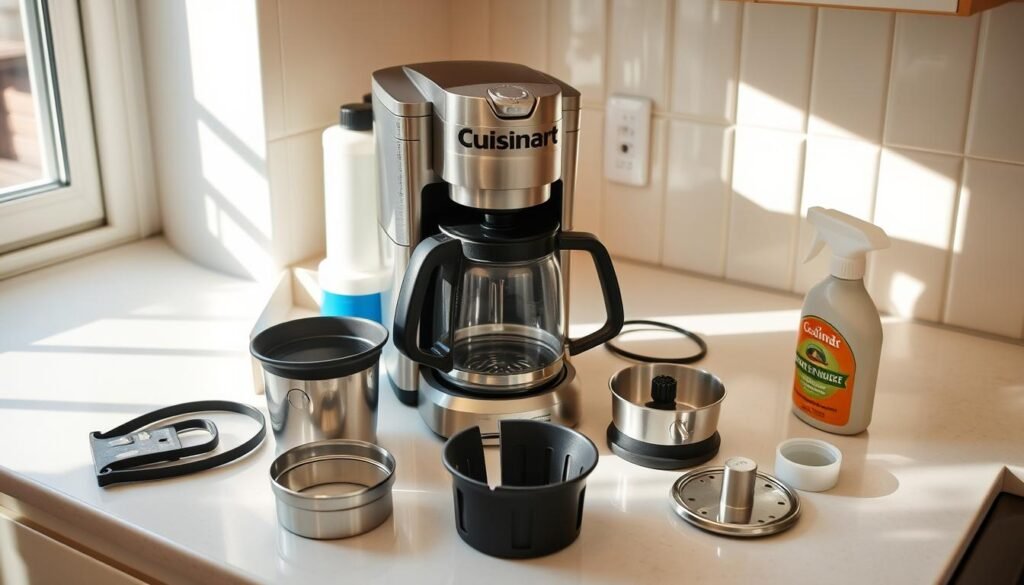
Here are the essential cleaning supplies for a deep clean:
- White Vinegar: A natural cleaner that descales and cleans the coffee maker.
- Mild Dish Soap: For washing parts like the carafe and brew basket.
- Soft Cloth or Sponge: To clean surfaces without scratching them.
- Water: For rinsing and mixing with vinegar for descaling.
| Supply | Purpose |
|---|---|
| White Vinegar | Descaling and cleaning |
| Mild Dish Soap | Washing removable parts |
| Soft Cloth or Sponge | Wiping down surfaces |
| Water | Rinsing and descaling |
Optional: Specialty Cleaners
For an easier clean or extra cleaning power, consider specialty coffee maker cleaners.
- Cuisinart Cleaning Solution: Made for Cuisinart coffee makers.
- Descaling Solutions: Found at hardware stores or online.
With these supplies, you’re ready to clean your Cuisinart coffee maker well.
Preparing Your Cuisinart Coffee Maker
To clean your Cuisinart coffee maker well, start with a few steps. These steps make sure the cleaning is safe and complete.how-to-clean-sink-drain
Turn Off and Unplug
The first thing to do is turn it off and unplug it. This step is very important to keep you safe from accidents or shocks. Make sure it’s fully turned off before you start cleaning.
Disassemble Components
Then, take apart the parts that need cleaning. This means the brew basket, carafe, and water reservoir. Check your Cuisinart coffee maker’s manual if you’re not sure how. Once you’ve taken them off, put them aside to clean.
By doing these steps, you’ll clean your Cuisinart coffee maker well. It will keep working great. Remember, regular care and cleaning are important to make your coffee maker last longer and keep your coffee tasting good.
Step-by-Step Cleaning Process
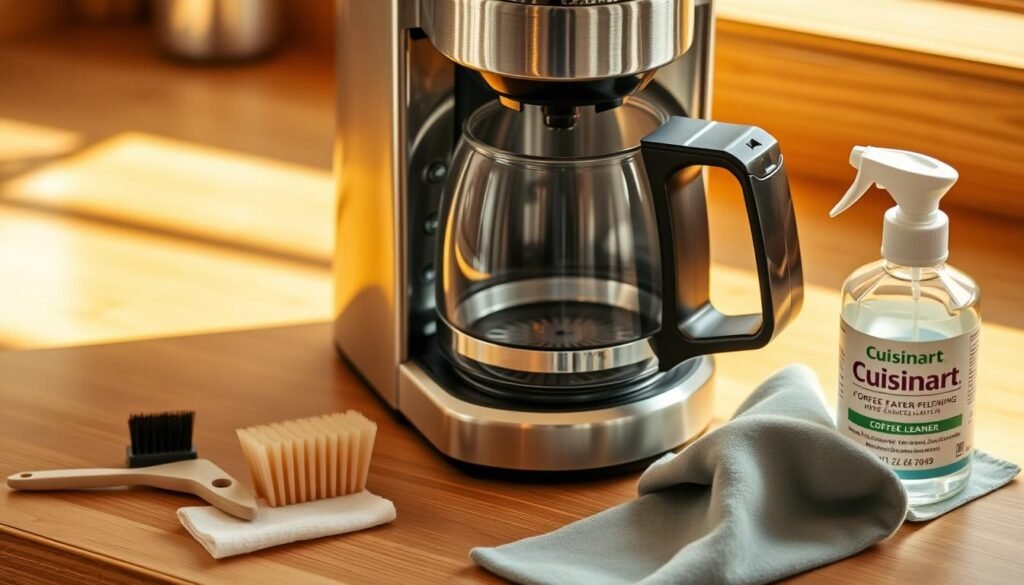
Now that we’ve prepared our Cuisinart coffee maker for cleaning, let’s dive into the step-by-step process. Cleaning your coffee maker regularly is crucial for maintaining its performance and the quality of your coffee.how-to-clean-leather-car-seats
Cleaning the Brew Basket
The brew basket is where the coffee grounds come into contact with the machine, making it a critical component to clean. To clean it, start by removing any leftover coffee grounds. Then, wash the brew basket with warm soapy water, using a soft sponge to remove any residue. Rinse thoroughly to ensure no soap remains.
Tip: For tougher stains, you can soak the brew basket in a mixture of equal parts water and white vinegar for about 30 minutes before washing.
Washing the Carafe
The carafe is another component that requires regular cleaning. After each use, rinse the carafe with warm water to prevent any coffee oils from building up. For a deeper clean, mix equal parts water and white vinegar in the carafe, and let it sit for a few minutes. Then, scrub the carafe with a soft brush and rinse thoroughly.how-to-clean-a-speaker-on-an-iphone
Cleaning the Water Reservoir
The water reservoir is a breeding ground for bacteria and mineral deposits. To clean it, first, remove any remaining water. Then, mix a solution of equal parts water and white vinegar, and fill the reservoir. Let it sit for about 30 minutes to an hour. Afterward, empty the reservoir and rinse it thoroughly with clean water. This process helps remove any bacterial growth and mineral buildup.
Regular cleaning of these components not only improves the taste of your coffee but also extends the lifespan of your Cuisinart coffee maker.
Deep Cleaning Your Coffee Maker
Deep cleaning your Cuisinart coffee maker is key to keeping it working well and your coffee tasting great. Over time, mineral deposits and old coffee oils can build up. This can change how your coffee tastes and even make the machine stop working.
It’s important to descale your coffee maker often. Descaling gets rid of mineral deposits that can build up, mainly in places with hard water.
Descaling with Vinegar
Using vinegar is a great and eco-friendly way to descale your Cuisinart coffee maker. Vinegar is a natural acid that can break down mineral deposits without leaving harsh chemicals behind.
- Mix equal parts water and white vinegar in the water reservoir.
- Run a brewing cycle as you normally would.
- Repeat the brewing cycle until the reservoir is empty.
- Rinse the reservoir thoroughly and run a few cycles with just water to remove any vinegar taste.
Using Commercial Descaling Solutions
If you don’t want to use vinegar or need a special descaling solution, you can use a commercial one. These products are made to remove mineral deposits and can be found at most hardware stores or home goods retailers.how-to-clean-mass-air-flow-sensor
When using a commercial descaling solution, make sure to follow the instructions. You’ll usually mix it with water, run it through the coffee maker, and then rinse well.
- Always descale your coffee maker as recommended by the manufacturer, usually every 3-6 months.
- Use the right descaling solution for your machine to avoid damaging it.
- After descaling, run multiple rinse cycles to ensure no residue remains.
How to Clean Cuisinart Single-Serve Models

To keep your Cuisinart single-serve coffee maker in top shape, follow these easy steps. These models are loved for their convenience and simplicity. But, they need regular cleaning to work well and last long.how-to-clean-a-retainer
Specific Instructions for Single-Serve Options
Cleaning your Cuisinart single-serve coffee maker involves a few key steps. First, make sure you have the user manual ready for specific guidance on cleaning your model.
Step 1: Start by turning off and unplugging your coffee maker. Take out any removable parts like the water reservoir, drip tray, and K-cup holder. Wash these parts with warm soapy water, rinse well, and dry them.
Descaling is key for single-serve models. Mix water and white vinegar or use a commercial descaling solution to descale your coffee maker. For detailed descaling instructions, check your user manual or the manufacturer’s guidelines.
- Run a cleaning cycle with the descaling solution.
- Rinse the machine by running multiple cycles with clean water.
- Repeat the descaling process if necessary, based on the manufacturer’s recommendations.
Regular cleaning and descaling will keep your Cuisinart single-serve coffee maker working great. This ensures your coffee always tastes amazing.
Maintenance Tips for Cuisinart Coffee Makers
Proper care and maintenance can make your Cuisinart coffee maker work better. Regular upkeep not only makes your coffee taste great but also makes your machine last longer.how-to-clean-a-stainless-steel-sink
Recommended Cleaning Frequency
How often you should clean your Cuisinart coffee maker depends on how much you use it. If you brew coffee every day, clean it every 1-2 months. If you use it less often, cleaning every 3-6 months is okay. But, if you see scaling or mineral buildup, clean it right away.
Daily Maintenance: Rinse the brew basket and carafe after each use to avoid buildup. This simple step can cut down on the need for deep cleaning.
Routine Maintenance Practices
There are also routine practices to keep your Cuisinart coffee maker in top shape.
- Descaling: Use a descaling solution to remove mineral deposits that can affect your coffee’s taste and your machine’s performance.
- Check and Replace Filters: Regularly check and replace the water filter to ensure clean water for brewing.
- Clean the Exterior: Use a damp cloth to wipe down the coffee maker’s exterior and remove splatters or dust.
By following these maintenance tips, your Cuisinart coffee maker will keep making great-tasting coffee for years.
Troubleshooting Common Issues

Fixing your Cuisinart coffee maker can solve common problems and help you make great coffee again. It’s key to find the main cause to fix it right.how-to-clean-a-self-cleaning-oven
Identifying Signs of Dirty Components
Dirty parts can really mess up your Cuisinart coffee maker. Look out for old coffee oils, mineral buildup, and coffee that tastes bad.
- Check the brew basket for coffee grounds and residue.
- Inspect the carafe for mineral deposits or stubborn stains.
- Examine the water reservoir for signs of scaling or bacterial growth.
Regular cleaning stops these problems. But if you’ve ignored your coffee maker, it’s time for a deep clean.
When to Seek Professional Help
Many Cuisinart coffee maker problems can be fixed by cleaning and troubleshooting. But, some issues need a pro. If you’ve cleaned and descaled but still have problems like leaks, bad brewing, or error messages, it’s time to call for help.
| Issue | Possible Cause | Recommended Action |
|---|---|---|
| Coffee not brewing | Clogged brew basket or faulty pump | Clean the brew basket; check the pump for issues |
| Leakage | Loose connections or damaged seals | Tighten loose parts; replace damaged seals |
| Error messages | Scale buildup or electronic malfunction | Descale the coffee maker; contact customer support |
If you’re not sure how to fix it or if the problem keeps coming back, reach out to Cuisinart’s customer support or a pro appliance repair service.how-to-clean-a-waffle-iron
Importance of Rinsing Thoroughly
Rinsing your Cuisinart coffee maker is a key step after cleaning. It makes sure your coffee maker is free from cleaning solution residue. This residue can change the taste of your coffee.
Cleaning your coffee maker is more than just removing dirt and old coffee oils. It’s also about getting rid of cleaning agent residues. Thorough rinsing is key to avoiding any residual tastes or odors that might come from the cleaning process.
Avoiding Residue Build-Up
One main reason to rinse your Cuisinart coffee maker well is to avoid residue build-up. Cleaning solution residue can build up inside the machine. This can harm its performance over time. Proper rinsing prevents this buildup and keeps your coffee maker working well.
To rinse your coffee maker well, start by running clean water through it a few times. This helps get rid of any leftover cleaning solution. Also, rinse the removable parts, like the brew basket and carafe, separately. This ensures they are free from residue.
Ensuring Great-Tasting Coffee
Rinsing your Cuisinart coffee maker well is also key for great-tasting coffee. Any cleaning residue left behind can affect the coffee’s flavor. By rinsing the machine well, you can make sure your coffee tastes perfect, without any unwanted tastes or odors.
Regular and thorough rinsing is a simple yet effective way to maintain your coffee maker’s performance and the quality of your coffee. By adding this step to your cleaning routine, you can enjoy a consistently great cup of coffee every time.how-to-clean-inside-of-a-windshield
Storing Your Cuisinart Coffee Maker

Storing your Cuisinart coffee maker right is key to keeping it working well. It helps your coffee maker stay in top shape and keep making delicious coffee.
Proper Storage Techniques
First, clean your coffee maker well. This is important to avoid bad tastes from old coffee oils and mineral deposits. After cleaning, dry everything to stop water spots and mineral buildup. Store it in a dry, cool spot, away from sunlight and moisture.
- Clean and dry the coffee maker and its components.
- Store the coffee maker in a dry, cool place.
- Avoid storing the coffee maker near a window or in direct sunlight.
- Keep the coffee maker away from children and pets.
Best Practices for Appliance Care
For your Cuisinart coffee maker’s care, follow some best practices. Check and replace worn-out parts, like the water filter, to improve its performance and life. Always check your user manual for maintenance and storage tips.
Regular maintenance is crucial for great-tasting coffee and a long-lasting appliance. By storing it right and caring for it regularly, your Cuisinart coffee maker will last for many years.
Frequently Asked Questions
Many Cuisinart coffee maker users have questions about cleaning. This section aims to answer them. Cleaning your coffee maker regularly is key to its performance and coffee quality.
How Often Should I Clean My Coffee Maker?
Cleaning frequency depends on how often you use it. Daily users should clean every 1-2 months to avoid scale and bacteria. Less frequent users can clean every 3-6 months.
Can I Clean It with Just Water?
Water is good for some cleaning, but not enough for a deep clean. Vinegar or a descaling solution is needed to remove mineral deposits. Cleaning with just water might not remove all residue, affecting coffee taste.how-to-clean-lvp-flooring
Tips for Effective Cleaning:
- Use a mixture of water and vinegar to descale your coffee maker.
- Regularly wash the brew basket and carafe with soap and warm water.
- Dry all parts thoroughly after cleaning to prevent water spots.
By following these tips, you can keep your Cuisinart coffee maker in top shape. It will continue to brew great-tasting coffee.
Conclusion: Enjoying Your Fresh Cup of Coffee
Now you know how to clean your Cuisinart coffee maker. This means you can have a fresh and tasty cup of coffee every time. Cleaning it regularly is key to keeping your coffee’s quality and flavor.
Benefits of Regular Cleaning
Cleaning your Cuisinart coffee maker often has many advantages. It improves the taste of your coffee, lowers the chance of bacteria, and makes the machine last longer. By keeping up with maintenance, you’ll enjoy better coffee and avoid expensive fixes.
Maintaining Your Coffee Maker
To keep your Cuisinart coffee maker working well, clean it every 1-2 months. This depends on how much you use it. You should descale, clean the brew basket, and wash the carafe regularly. These easy steps will help you enjoy your coffee maker’s benefits and keep it running smoothly.