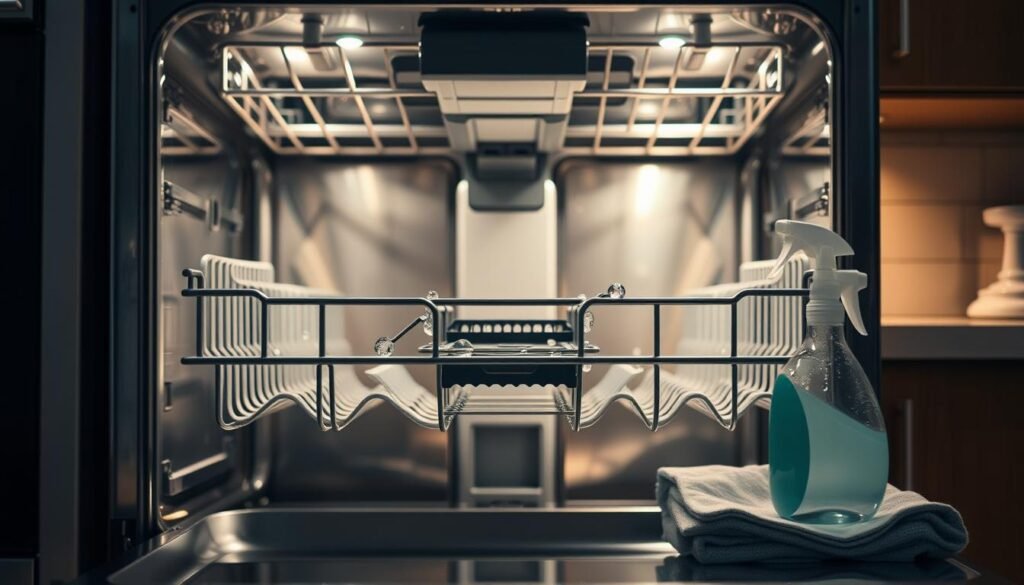
A dirty dishwasher can be a breeding ground for bacteria and grime, affecting the cleanliness of your dishes. Did you know that a dishwasher can harbor more bacteria than a toilet handle if not regularly cleaned? This shocking fact highlights the importance of maintaining your dishwasher.
Cleaning your dishwasher is a straightforward process that can be done at home. By following a few simple steps, you can ensure your dishwasher continues to perform optimally. This keeps your dishes sparkling clean and hygienic.
Key Takeaways
- Regular cleaning is essential for maintaining your dishwasher’s performance.
- A dirty dishwasher can harbor bacteria and grime.
- Cleaning your dishwasher is a simple process that can be done at home.
- Regular maintenance can extend the lifespan of your dishwasher.
- A clean dishwasher ensures your dishes are hygienically cleaned.
Why Cleaning Your Dishwasher Is Important
Many of us forget how crucial dishwasher maintenance is. It’s key for your appliance’s long life and efficiency. Cleaning it regularly is not just about cleanliness. It also affects how well your dishwasher works.
Benefits of a Clean Dishwasher
A clean dishwasher brings many key benefits. It improves hygiene, enhances washing results, and cuts down on energy use. When your dishwasher is clean, it can wash dishes better. This keeps your kitchen spotless.
Also, a well-kept dishwasher can save you money on bills. It works more efficiently, so you don’t have to re-wash dishes. This saves water and energy too.
| Benefits | Description |
|---|---|
| Improved Hygiene | Regular cleaning removes bacteria and germs, ensuring your dishes are sanitized. |
| Better Washing Results | A clean dishwasher can wash dishes more effectively, removing food residue completely. |
| Reduced Energy Consumption | Efficient operation means less energy is used for each wash cycle. |
Signs Your Dishwasher Needs Cleaning
If your dishes aren’t as clean as they used to be, or if your dishwasher smells bad, it’s time to clean it. Visible grease or food inside and strange noises during wash are other signs.
By watching for these signs and cleaning regularly, you can keep your dishwasher in great shape. This ensures it will continue to work well for you.You can learn more about how to clean a strawberries.
What You’ll Need to Clean Your Dishwasher
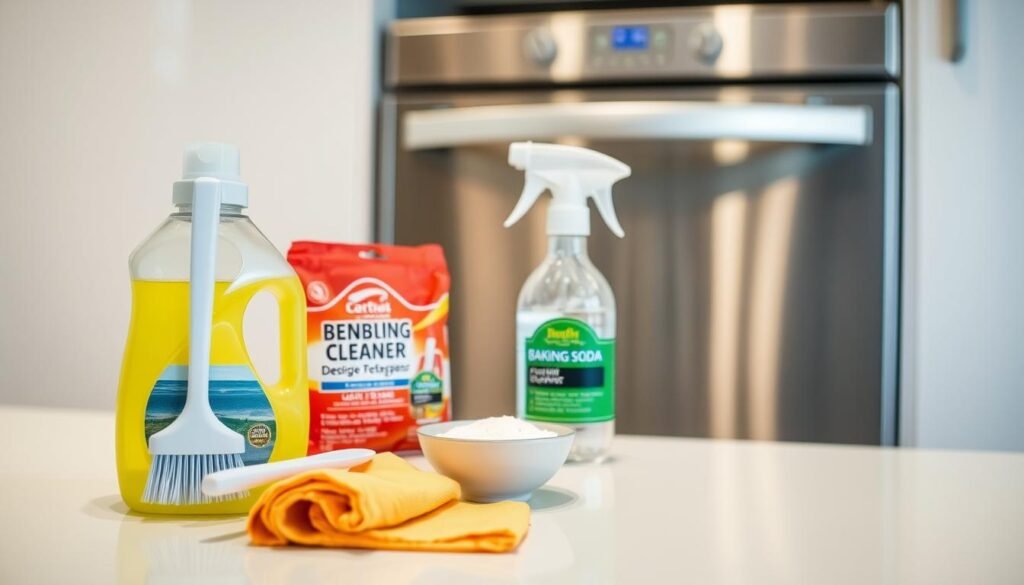
To clean your dishwasher well, you’ll need some basic cleaning supplies and optional tools for a deeper clean. Having these supplies ready will make the cleaning process easier and faster.
Essential Cleaning Supplies
Here are the must-have items for cleaning your dishwasher:
- White vinegar: A natural cleaner that gets rid of grease and bad smells.
- Baking soda: Helps get rid of smells and cleans the inside of the dishwasher.
- A soft-bristled brush or toothbrush: Good for cleaning hard spots and the filter.
- A microfiber cloth or sponge: For wiping down the inside and outside of the dishwasher.
You can buy these cleaning supplies at most grocery or hardware stores. For more detailed cleaning guides, check out Finish Dishwashing for more tips.
Optional Tools for Deep Cleaning
For a deeper clean, consider these optional tools:
- A dishwasher cleaning product or cleaner: Made to tackle tough grease and food bits.
- A descaling solution or citric acid: Removes mineral deposits and scale buildup.
- A long-handled brush: For getting into the dishwasher’s corners and crevices.
These dishwasher cleaning products are available at most hardware stores or online. Using these tools will ensure your dishwasher is thoroughly cleaned and well-maintained.
Preparing Your Dishwasher for Cleaning
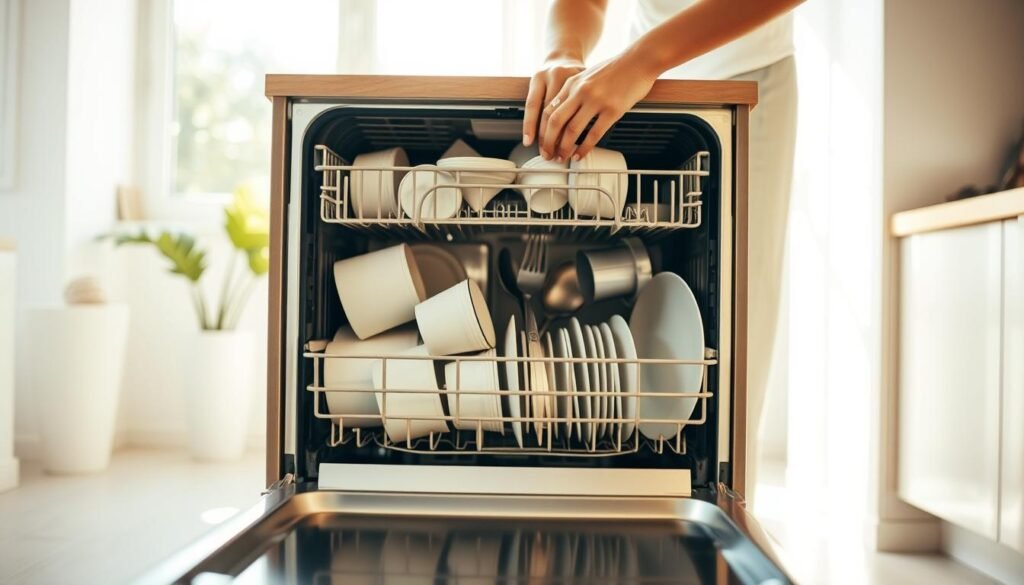
Before you start cleaning, make sure your dishwasher is ready. This preparation makes the cleaning process smoother and more effective.You can learn more about how to clean airpods.
Emptying the Dishwasher
First, empty your dishwasher completely. Take out all dishes, utensils, and racks. This lets you reach every part of the dishwasher.
Check the bottom for any food or debris. Emptying the dishwasher helps you see where you need to focus. Also, remove any parts that can be taken off, as the manufacturer suggests.
Inspecting the Filter and Spray Arm
Then, look at the filter and spray arm for blockages. The filter is at the bottom and can be cleaned. The spray arm might have clogs or mineral buildup.
| Component | Inspection Checklist |
|---|---|
| Filter | Check for debris, food particles, and blockages |
| Spray Arm | Inspect for clogs, mineral buildup, and proper rotation |
| Dishwasher Interior | Look for grease, food residue, and signs of wear |
By doing these steps, you prepare your dishwasher for a deep clean. This ensures it works well and efficiently.
Cleaning the Filter
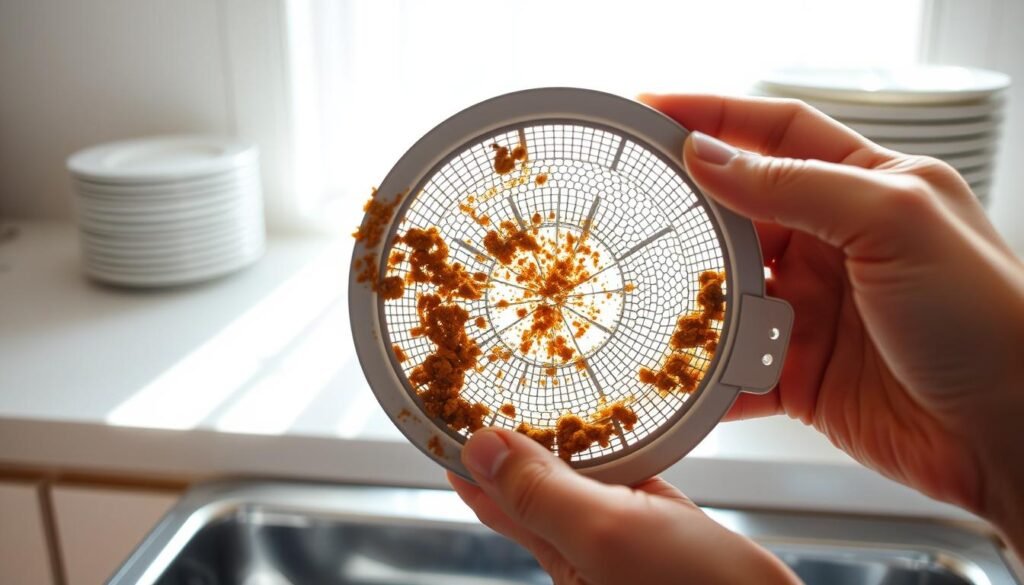
Keeping your dishwasher filter clean is essential for sparkling dishes. The filter catches food and debris, stopping them from getting back on your dishes.
How to Remove the Filter
To begin, find and take out the filter. The steps can differ based on your dishwasher’s type. Always check your user manual for guidance. The filter is usually at the dishwasher’s bottom. You can twist it counterclockwise or release a catch to remove it.
Tip: Before you remove the filter, see if your dishwasher has a coarse or fine filter, or both. Some models have multiple layers.
Steps to Clean the Filter
After taking it out, wash the filter under running water to clear big debris. For a deeper clean, soak it in warm soapy water.
- Use a soft brush to gently scrub away any stubborn particles.
- Rinse the filter thoroughly to ensure all soap residue is removed.
- Dry the filter before replacing it to prevent water spots.
After cleaning and drying, put the filter back in place. Make sure it’s locked well to avoid problems during use.
| Filter Type | Cleaning Method | Frequency |
|---|---|---|
| Coarse Filter | Rinse under running water | Monthly |
| Fine Filter | Soak in warm soapy water | Every 3 months |
Regularly cleaning your dishwasher filter makes your dishes cleaner. It also keeps your dishwasher working well and lasting longer.You can learn more about how to clean washing machine.
Cleaning the Spray Arms

To keep your dishwasher working well, it’s important to clean the spray arms often. These arms help spread water around the dishwasher. If they get clogged, your dishwasher won’t clean as well.
Checking for Clogs
First, look for any clogs in the spray arms. Food and debris can block the small holes. This makes the spray arms less effective.
- Remove the spray arms as your dishwasher’s manual says.
- Look for any blockages in the spray arms.
- Use a toothpick or small brush to gently remove debris.
How to Clean the Spray Arms
Cleaning the spray arms is easy and helps your dishwasher work better. Here’s how to do it:
- Soak the spray arms in warm, soapy water to loosen grease and food.
- Scrub them with a soft-bristled brush to get rid of tough debris.
- Rinse them well to get rid of soap.
- Put the spray arms back on as your manual instructs.
| Cleaning Step | Purpose |
|---|---|
| Soaking | Loosens grease and food residue |
| Scrubbing | Removes stubborn debris |
| Rinsing | Removes soap residue |
By following these steps, you can keep your dishwasher’s spray arms clean. This ensures your dishes are always sparkling. Regular maintenance, like cleaning the spray arms, helps your dishwasher last longer.
Wiping Down the Interior

Now that we’ve prepped our dishwasher, it’s time to clean its interior. This step is key to remove grease, food, and debris. These can harm your dishwasher’s performance.
Using Vinegar for a Fresh Clean
Vinegar is great for cleaning your dishwasher’s interior. It’s a natural cleaner that removes odors and sanitizes. To use it, pour 1 cup of white vinegar into a bowl and place it on the top rack. Then, run a hot water cycle. The vinegar’s acid breaks down tough grease and food residue.
For an extra fresh smell, add a few drops of lemon essential oil to the vinegar. This will make your dishwasher smell great and reduce odors.
Scrubbing the Walls and Door Seal
Vinegar cleans well, but scrubbing is also needed. Use a soft-bristled brush or a non-abrasive scrubber with warm soapy water. Pay close attention to the door seal, as mold and mildew can grow there.
After scrubbing, run a rinse cycle to get rid of soap. For hard grime, mix baking soda and water to make a paste. Apply it, let it sit, then scrub.
| Cleaning Method | Effectiveness | Ease of Use |
|---|---|---|
| Vinegar Cycle | High | Easy |
| Scrubbing with Soap | Medium | Moderate |
| Baking Soda Paste | High | Moderate |
Cleaning the Dishwasher Door

Cleaning the dishwasher door is key to keeping your appliance in top shape. A clean door makes your dishwasher look better and stops grime and bacteria buildup.
Focusing on the Door Gasket
The door gasket is a must-clean area. It catches food and debris, causing mold and mildew. Start by wiping it with a damp cloth.
For tough spots, make a paste with baking soda and water. Apply it, wait a few minutes, then scrub with a soft brush and rinse with warm water.
Tips for a Streak-Free Finish
For a streak-free finish, use a microfiber cloth and a vinegar solution. Spray the solution on the door and wipe it clean. Use a gentle cleanser for tough stains.
Buff the door with a dry microfiber cloth to remove streaks and residue.
| Cleaning Task | Recommended Method | Frequency |
|---|---|---|
| Cleaning the Door Gasket | Baking soda paste and soft-bristled brush | Monthly |
| Achieving a Streak-Free Finish | Microfiber cloth and vinegar solution | Weekly |
For more cleaning tips, check out Home Depot’s guide. Regular cleaning keeps your dishwasher looking and working great.
Descaling Your Dishwasher
Descaling your dishwasher is key to keeping it running well. Minerals from water can build up inside, hurting its performance and causing problems. It’s important to descale your dishwasher to keep it in good shape.You can learn more about how-to-clean-a-coffee-maker.
Knowing when and why to descale is crucial. If you live in an area with hard water, you’ll likely face scaling issues. For tips on keeping your dishwasher clean and sanitized, check out this guide.
When and Why to Descale
Descaling is needed when you see limescale or mineral buildup in your dishwasher. This can show as white spots or residue on dishes or less effective cleaning. Regular descaling keeps your dishwasher working well.
How to Use Citric Acid or Commercial Descalers
To descale, you can use citric acid or a commercial descaler. Citric acid is a natural cleaner that removes mineral deposits. Just pour one cup of citric acid powder into the dishwasher and run a hot water cycle. Or, follow the instructions for a commercial descaler.
It’s important to follow the instructions carefully, no matter your choice. Regular descaling, along with other maintenance, extends your dishwasher’s life. It keeps it running at its best.
Removing Bad Odors
If your dishwasher smells, don’t worry; I’ve got practical tips to eliminate those odors. Bad odors can make your dishwasher less efficient and affect the cleanliness of your dishes.
Natural Remedies for Odor Elimination
One of the simplest ways to remove bad odors is by using natural remedies. For instance, you can run a cleaning cycle with a cup of white vinegar. Vinegar is a natural disinfectant that helps eliminate odor-causing bacteria. You can also use lemon juice for its fresh scent and antibacterial properties.
Another effective method is to leave the dishwasher door slightly ajar after a cycle to help it dry out. Moisture buildup is a common cause of bad odors, so ensuring your dishwasher dries properly can significantly reduce smell.
Using Baking Soda for Freshness
Baking soda is renowned for its ability to absorb and neutralize odors. To use it, sprinkle a cup of baking soda at the bottom of your dishwasher and run a hot water cycle. This helps to freshen up the interior and eliminate any lingering smells. For an extra boost, you can also mix baking soda with vinegar to create a powerful cleaning solution.
For more detailed instructions on cleaning a smelly dishwasher, you can visit this helpful guide. It provides additional tips and tricks to keep your dishwasher smelling fresh.
Maintenance Tips for Your Dishwasher
To keep your dishwasher running well, follow some easy steps. Regular cleaning and prevention help your dishwasher work its best.
Regular Cleaning Schedule
It’s important to clean your dishwasher regularly. Clean the filter and spray arms every 1-2 months, based on how much you use it.
- Check and clean the filter regularly to prevent clogs.
- Inspect the spray arms for blockages and clean them as needed.
- Run a cleaning cycle with a dishwasher cleaner or vinegar every 3-6 months.
| Maintenance Task | Frequency | Benefits |
|---|---|---|
| Cleaning the Filter | Every 1-2 months | Prevents clogs, ensures proper water flow |
| Inspecting Spray Arms | Every 1-2 months | Ensures even water distribution, prevents blockages |
| Running a Cleaning Cycle | Every 3-6 months | Removes grease, food particles, and odors |
Preventative Measures to Avoid Build-Up
To stop build-up and keep your dishwasher working, try these tips:
- Always scrape off large food particles from dishes before loading them into the dishwasher.
- Regularly check the dishwasher’s drain for blockages.
- Use a dishwasher cleaner or descaler as recommended by the manufacturer.
By doing these things, you can avoid bad smells and poor cleaning. Your dishwasher will stay in great shape.
Troubleshooting Common Problems
Issues like odd noises and drainage problems can be fixed easily. When your dishwasher acts up, it messes up your kitchen plans.
Identifying Unusual Noises
Unusual dishwasher noises can have many causes. First, make sure it’s level and dishes are arranged right.
- Ensure that the spray arms are not obstructed by large dishes or utensils.
- Check for any loose items inside the dishwasher that could be causing the noise.
- Verify that the dishwasher’s mounting screws are tight and the door is sealing properly.
Fixing Water Drainage Issues
Dealing with water drainage problems can be tough. Start by cleaning the filter and checking it’s clear of debris.
| Issue | Possible Cause | Solution |
|---|---|---|
| Water not draining | Clogged filter or drain hose | Clean the filter and check the drain hose for kinks or blockages |
| Slow drainage | Partial clog or improper installation | Inspect the drain hose and ensure the dishwasher is properly installed |
By following these steps, you can often fix common dishwasher problems. This gets it working smoothly again.
Conclusion: Enjoy a Spotless Dishwasher
Keeping your dishwasher clean is key for its best performance. By following the steps in this guide, your dishwasher will always give you clean dishes. This makes your life easier and your dishes sparkling.
Maintaining a Cleaning Schedule
Having a regular cleaning routine is essential. Clean the filter, check the spray arms, and run a sanitize cycle often. This will make your dishwasher work better.
Tips for Long-Term Maintenance
To keep your dishwasher in great shape, scrape off food before loading. Make sure the water is at least 120 degrees. Also, use Cascade dishwasher cleaner or vinegar to get rid of mineral buildup and bad smells.
By doing these things regularly, your dishwasher will stay clean for many years. Enjoy the convenience of a spotless dishwasher every day.