If you love yoga, you know how important it is to keep your mat clean. A study showed that yoga mats can have more bacteria than gym equipment. Keeping your yoga mat clean is key for both health and durability.
Cleaning your yoga mat regularly stops bacteria and bad smells. It also makes your mat last longer. Here, I’ll share my best tips for cleaning your yoga mat effectively. These tips will help keep your mat fresh and strong.
Key Takeaways
- Importance of regular yoga mat cleaning
- Best practices for different types of yoga mats
- Tips for maintaining hygiene and longevity
- Effective cleaning methods for yoga mats
- Benefits of a clean yoga mat for a healthy practice
Understanding the Importance of a Clean Yoga Mat
Keeping your yoga mat clean is crucial for your health and the mat’s life span. Cleaning it regularly makes your practice both hygienic and enjoyable.
Benefits of Regular Cleaning
Cleaning your yoga mat often has many advantages. It keeps the mat’s grip strong, helping you stay steady during poses. It also gets rid of dirt, sweat, and bacteria that can make your mat smell and cause infections.
A clean mat also lasts longer. Dirt and grime can damage the material if not cleaned. Here’s a quick comparison to show the benefits:
| Aspect | Clean Yoga Mat | Dirty Yoga Mat |
|---|---|---|
| Slip Resistance | High grip, reduced slipping | Low grip, increased slipping |
| Hygiene | Free from bacteria and odors | Prone to bacterial growth and odors |
| Durability | Longer lifespan | Shorter lifespan due to material degradation |
Health Risks of a Dirty Mat
Using a dirty yoga mat can harm your health. Bacteria, fungi, and other germs can lead to infections, which is risky if you have cuts or sensitive skin. You might also have allergic reactions to the dirt and grime.
To avoid these risks, make cleaning your mat a part of your yoga routine. This way, you’ll keep yourself safe and enjoy a better yoga experience.how-to-clean-white-shoes
Materials Used in Yoga Mats
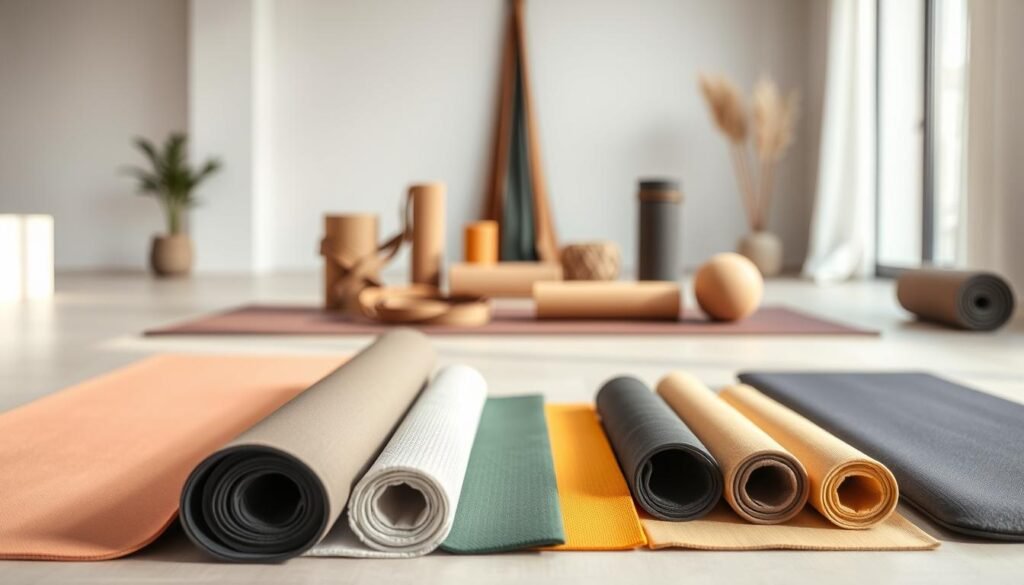
It’s important to know what your yoga mat is made of to keep it in good shape. Yoga mats come in different materials, each with its own benefits and needs.
Common Materials and Their Care
Yoga mats are often made from PVC, rubber, TPE, or a mix of these. PVC mats are tough and simple to clean but aren’t good for the planet. Rubber mats give a great grip but can smell a lot when new. TPE mats are better for the environment because they’re recyclable.
To keep your yoga mat in top condition, knowing its material is key. For example, if you have a Manduka yoga mat, check the maker’s guide for how to clean it right.
Eco-Friendly Mat Options
Eco-friendly yoga mats are becoming more popular because they’re better for the planet. They’re made from natural rubber, jute, or recycled stuff. They’re a greener choice for yogis.
When picking an eco-friendly mat, think about how long it lasts, how well it grips, and how comfy it is. Some eco-friendly mats need special care, like avoiding certain cleaners or drying them right after washing.
By knowing what your yoga mat is made of and following the right care tips, you can make it last longer. This will also improve your yoga practice.
Cleaning Frequency Recommendations
Keeping your yoga mat clean is important for hygiene and quality. Regular cleaning can make your mat last longer and improve your practice.how-to-clean-tv-screen
It’s key to clean your mat after each use and do a deeper clean weekly. This keeps your mat in top shape.
After Each Use
Cleaning your mat after each use is vital. It removes sweat and bacteria that build up. A quick wipe with a damp cloth or a yoga mat cleaner is enough.
This habit stops dirt and bacteria from building up. It keeps your practice clean and healthy.
Tips for Quick Cleaning:
- Wipe your mat with a damp cloth.
- Use a yoga mat cleaner or a mix of water and mild soap.
- Focus on areas where your hands and feet touch.
Weekly Deep Cleaning
Doing a weekly deep clean is also important. It removes tough dirt and keeps your mat in good shape. This process makes your mat’s grip and freshness last longer.
Deep Cleaning Process:
| Step | Description |
|---|---|
| 1 | Mix a cleaning solution of water and mild soap. |
| 2 | Apply the solution to the mat and gently scrub. |
| 3 | Rinse the mat thoroughly with clean water. |
| 4 | Dry the mat with a clean towel. |
By following these cleaning tips, you can keep your yoga mat in great shape. Regular cleaning boosts hygiene and makes your mat last longer.
Essential Cleaning Supplies
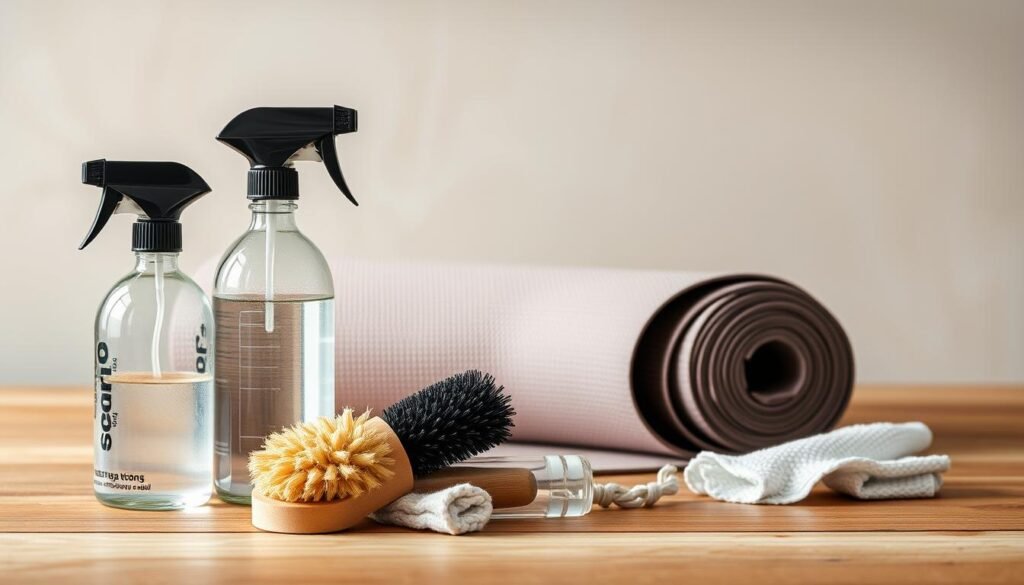
To keep your yoga mat clean, you need the right supplies. You don’t have to buy special products. Many effective solutions can be made at home or found in stores.how-to-clean-oven
Homemade Cleaning Solutions
Using homemade cleaning solutions is simple and eco-friendly. A mix of water and vinegar works well. The vinegar’s acid breaks down dirt and kills bacteria without harming most mats.
To make this solution, mix equal parts water and white vinegar in a spray bottle. Add a few drops of your favorite essential oil, like tea tree oil, for a nice smell. Shake the bottle well before each use.
Another option is a mix of mild dish soap and warm water. This is gentle on mats and good at removing dirt. But, make sure to rinse your mat well with clean water to remove soap.
Store-Bought Cleaners
If you prefer store-bought cleaners, many are designed for yoga mats. Look for eco-friendly or biodegradable products to reduce environmental impact.
Popular brands offer safe and eco-friendly yoga mat cleaners. Always read reviews and check the ingredients to meet your standards.
| Cleaning Solution | Ingredients | Benefits |
|---|---|---|
| Water & Vinegar | Equal parts water and white vinegar | Effective against bacteria, eco-friendly |
| Mild Dish Soap | Mild dish soap and warm water | Gentle on mats, effective at removing dirt |
| Store-Bought Cleaners | Varies by brand | Convenient, often eco-friendly options available |
Choosing the right cleaning supplies helps keep your yoga mat clean and healthy. Whether you make your own solution or buy one, regular and gentle cleaning is key.
Step-by-Step Guide to Cleaning Your Yoga Mat

A clean yoga mat is key for a safe and effective practice. It helps prevent infections and improves grip. Regular cleaning is essential.
Basic Cleaning Process
Wipe your mat with a soft cloth or paper towel after each use. This removes dirt and sweat. It’s a simple step to keep your mat in good shape.
- For daily cleaning, mix water with mild soap. Dampen a cloth and gently wipe the mat.
- Avoid harsh chemicals or abrasive cleaners. They can harm the mat’s material.
Deep Cleaning Techniques
Deep cleaning is needed to remove tough stains and sanitize the mat. I use a mix of equal parts water and white vinegar for this.
- Apply vinegar solution directly to stains. Let it sit for a few minutes before wiping clean.
- Some mats can be deep cleaned in a bathtub with warm water and mild detergent. But, follow the manufacturer’s instructions carefully.how-to-clean-silver
Here’s a comparison of different cleaning methods for yoga mats:
| Cleaning Method | Effectiveness | Ease of Use | Suitability |
|---|---|---|---|
| Mild Soap and Water | High | Easy | Most Mats |
| Vinegar Solution | High | Easy | Most Mats, Eco-Friendly |
| Store-Bought Cleaners | Variable | Easy | Depends on Mat Material |
By following these cleaning techniques, you can keep your yoga mat clean and in good condition. This will improve your overall practice.
Tips for Quick Clean-Ups
Keeping your yoga mat clean doesn’t have to take a lot of time. With a few simple tips, you can keep your mat clean and fresh, even when you’re busy.
Using Wipes for Convenience
Using wipes is a quick and easy way to clean your yoga mat. These wipes are pre-moistened with a gentle cleaning solution. They work well against sweat and bacteria.
When picking wipes, look for ones that are eco-friendly or made from natural ingredients. This ensures they’re gentle on your mat and the planet. Some wipes even have calming scents like lavender, which can make your practice more enjoyable.
| Brand | Eco-Friendly | Scent Options |
|---|---|---|
| YogaWipes | Yes | Lavender, Unscented |
| MatClean | No | Citrus, Unscented |
| EcoMat | Yes | Eucalyptus, Unscented |
Spot Cleaning Tips
When you don’t have wipes, spot cleaning is a good option. Use a damp cloth with a bit of mild soap to clean dirty spots.
To spot clean right, don’t use too much water. It can damage your mat. Dampen a cloth, add a little soap, and clean the area in circles. Then, use a clean, damp cloth to remove any soap left behind.
By following these quick clean-up tips, you can keep your yoga mat clean and fresh. This will improve your practice and make your mat last longer.
Drying and Storing Your Yoga Mat
Keeping your yoga mat clean and dry is key for a good practice. A fresh mat feels better and stops bacteria and smells. We’ll show you how to dry and store your mat right.
Recommended Drying Methods
After washing your mat, dry it well. Lay it flat or hang it on a rack. Don’t put it in direct sunlight, as it can damage the material. For faster drying, pat it dry with a clean towel.
Optimal Storage Solutions
When your mat is dry, it’s time to store it. Roll it loosely to avoid creases. Store it somewhere with good air flow. Use a yoga mat bag or strap to keep it tidy. For more cleaning tips, check Manduka’s guide.
| Drying Method | Storage Tip |
|---|---|
| Air dry or pat dry with a towel | Roll loosely and store in a ventilated area |
| Avoid direct sunlight | Use a yoga mat bag for protection |
Special Considerations for Different Types of Mats
Cleaning your yoga mat starts with knowing its material. Each material has its own needs to stay clean and in good shape.how-to-clean-iphone-charging-port
For Cork Mats
Cork yoga mats are eco-friendly and have a natural feel. To keep them clean, use a gentle method.
- Don’t use harsh chemicals or too much water, as cork gets damaged by moisture.
- For everyday cleaning, use a dry or slightly damp cloth with mild soap.
- For a deeper clean, mix equal parts water and white vinegar in a spray bottle. Spray lightly and wipe with a damp cloth.
For TPE Mats
TPE mats are tough and simple to clean, loved by many yogis. But, they need the right care to last.
| Cleaning Method | Description |
|---|---|
| Daily Cleaning | Wipe with a soft cloth that’s damp with water or mild soap. |
| Deep Cleaning | Use water and mild detergent. Clean with a soft-bristled brush, then rinse well and dry. |
Knowing what your yoga mat needs, whether it’s cork, TPE, or something else, helps keep it clean and in top shape for longer.
Maintaining the Longevity of Your Yoga Mat
To keep your yoga mat in good shape, avoid common damages and clean it regularly. Don’t let sunlight, harsh cleaners, or water damage your mat. By following the cleaning tips from earlier, you can keep your mat in top condition.
Common Damages to Avoid
Using bleach or soap can harm your mat, and too much sunlight can break it down. To keep your mat lasting longer, steer clear of these mistakes. For mats like Manduka’s PRO Series or eKO Series, check the manufacturer’s cleaning advice. You can learn more about cleaning different mats on the Manduka website.
Knowing When to Replace Your Yoga Mat
Even with the best care, your yoga mat will eventually need a replacement. Look out for signs like wear, odors, or a slippery surface. Regular checks and timely replacements will keep your practice safe and fun. By focusing on your mat’s longevity, you’ll enjoy a better practice and make the most of your investment.