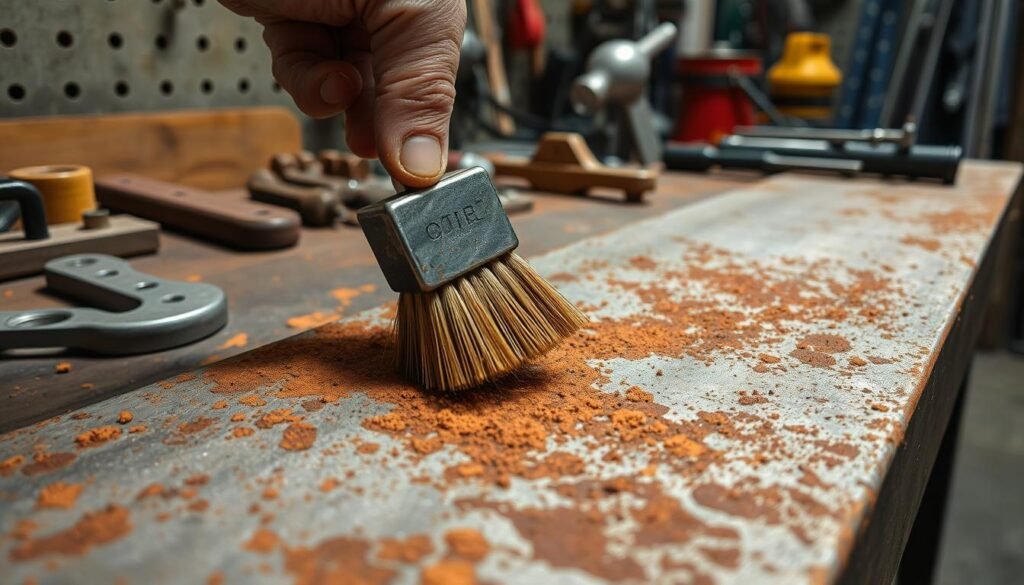
Rust can damage metal surfaces over time. Nearly 20% of the world’s steel production is lost to rust each year. This shows how important it is to remove rust effectively.
Cleaning rust off metal is not just about looks. It’s also key to keeping metal objects strong. In this article, I’ll show you how to remove rust from metal surfaces. You’ll get practical tips and techniques to do the job right.
By the end of this guide, you’ll know how to handle rust on different metal surfaces. This includes tools, machinery, and decorative items.
Key Takeaways
- Understand the importance of removing rust from metal surfaces.
- Learn effective methods for cleaning rust off metal.
- Discover tips for preventing rust from forming in the future.
- Gain confidence in tackling rust on various metal objects.
- Explore the best practices for maintaining metal surfaces.
Understanding Rust and Its Causes
Knowing why rust happens is key to keeping metal surfaces strong. Rust is a big problem that harms many metals, causing them to weaken and break down.
What is Rust?
Rust is a kind of corrosion that happens when metals, like iron or its mixes, meet oxygen and moisture. This reaction creates iron oxide, which looks like the flaky, reddish-brown stuff we call rust.
To learn more about rust, check out this guide. It gives a detailed look at how rust forms.
Why Does Rust Form on Metal?
Rust forms on metal because of moisture, oxygen, and the metal’s makeup. Iron or steel gets weak when it meets air and water, turning into iron oxide. Things like high humidity, saltwater, and acidic places make this happen faster.
The Impact of Rust on Metal Surfaces
Rust can really hurt metal surfaces. It makes the metal weaker, less durable, and ugly. Rust can also make metal objects more likely to break or fail.
| Factors Influencing Rust Formation | Effect on Rust Formation |
|---|---|
| Moisture | Accelerates rust formation |
| Oxygen | Essential for rust formation |
| High Humidity | Increases the rate of rust formation |
| Saltwater | Significantly accelerates rust formation |
By knowing why rust happens and how it affects metal, we can stop and fix rust problems. Keeping metal clean and using protective coatings can help fight rust.
Tools and Materials Needed for Rust Removal
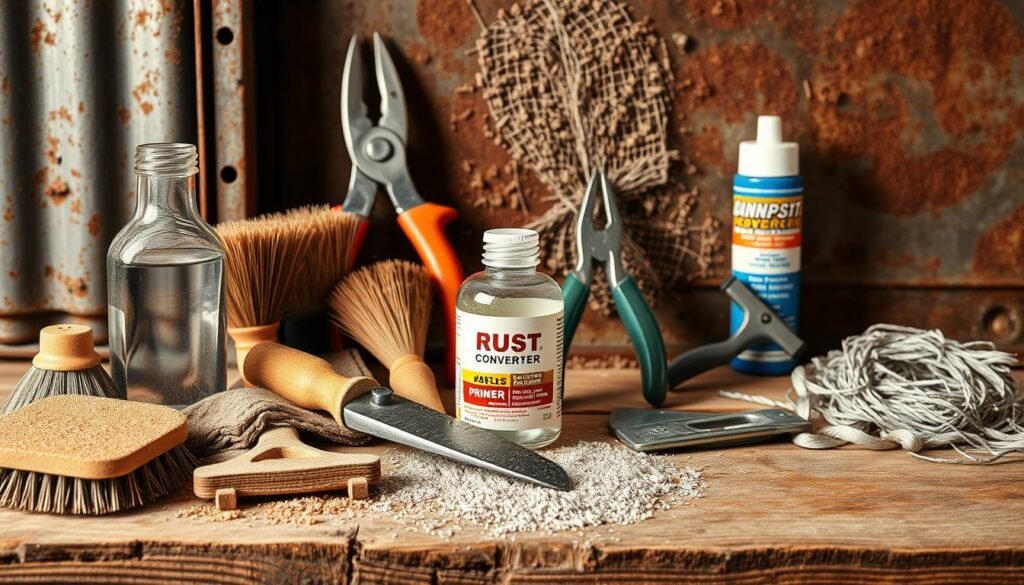
To remove rust successfully, you need the right tools and materials. Before you begin, know what you’ll need to remove rust from metal.
Essential Tools for the Job
You’ll need basic tools to remove rust. These include:
- A wire brush or a steel wool pad to scrub away the rust
- Sandpaper or sanding blocks for smoothing out the metal surface
- A drill with a wire wheel attachment for more stubborn rust
- A scraper or putty knife for removing loose rust
Table: Essential Tools for Rust Removal
| Tool | Purpose |
|---|---|
| Wire Brush | Scrubbing away rust |
| Steel Wool Pad | Scrubbing away rust |
| Sandpaper/Sanding Blocks | Smoothing out metal surfaces |
| Drill with Wire Wheel | Removing stubborn rust |
Recommended Cleaning Solutions
You’ll also need the right cleaning solutions. Some good options are:
- CLR (a powerful cleaner for removing rust and mineral deposits)
- Phosphoric acid-based cleaners (effective at converting rust into a stable surface)
- Vinegar (a natural and non-toxic alternative for mild rust)
Safety Gear to Use While Working
Always prioritize safety when working with rust removal tools and solutions. Wear:
- Protective gloves to prevent skin contact with harsh chemicals
- Safety goggles to protect your eyes from debris and chemical splashes
- A dust mask or respirator to avoid inhaling dust and fumes
With the right tools, materials, and safety gear, you’re ready to tackle rust removal.
Step-by-Step Guide to Removing Rust
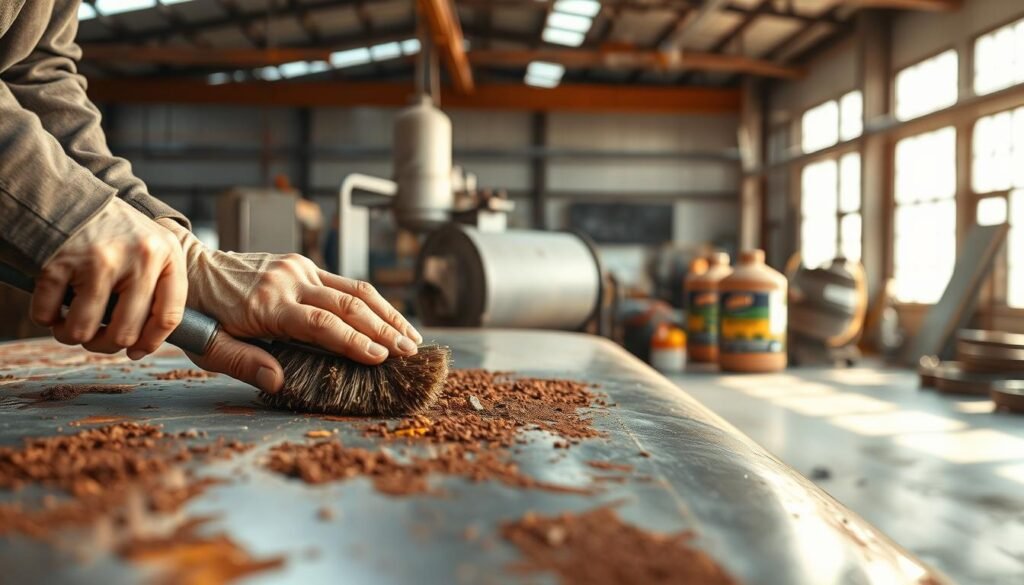
To make metal surfaces look new again, you need to know how to remove rust. This guide will show you the steps to clean rust off metal effectively.
Preparing Your Workspace
First, get your workspace ready. Wear gloves and safety glasses to avoid injuries from chemicals or sharp edges. Cover your work surface with old newspapers or a plastic sheet to prevent stains and damage.
Make sure your workspace has good air flow. Open windows or use a fan. This is key when using chemical rust removers that give off strong fumes.
Cleaning the Rusted Area
Start by removing any loose debris or dirt from the rusted area. Use a soft brush or cloth for this. It helps the rust removal solution work better.
If the rust is really bad, you might need a wire brush or sandpaper to scrape off the top layer. But be careful not to scratch the metal.
Applying the Rust Removal Solution
Choose the right rust removal solution for your metal and rust level. For light rust, try a mix of vinegar or lemon juice with salt. For tougher rust, use a commercial rust remover.
Use a cloth or brush to apply the solution to the rusted area. Make sure it’s fully covered. Let it sit for 30 minutes to an hour before rinsing with water.
Finalizing the Cleaning Process
After removing the rust, dry the metal surface thoroughly with a clean towel. This prevents water spots. If needed, apply a rust-inhibiting coating or wax to protect the metal from future rust.
Check the metal surface to make sure all rust is gone. If some rust is left, you might need to do the process again.
| Step | Description | Tips |
|---|---|---|
| 1. Prepare Workspace | Wear protective gear and cover work surface | Ensure good ventilation |
| 2. Clean Rusted Area | Remove loose debris and dirt | Use a wire brush or sandpaper for severe rust |
| 3. Apply Rust Removal Solution | Choose a suitable solution and apply it | Let it sit before rinsing off |
| 4. Finalize Cleaning | Dry the metal surface and apply protection | Inspect for remaining rust |
Natural Methods for Rust Removal
Using natural ingredients can be a simple way to remove rust from metal surfaces. This approach is not only eco-friendly but also uses items you might already have at home.
Using Vinegar as a Rust Remover
Vinegar is a popular natural remedy for rust removal. Its acidic properties make it effective. To use vinegar, submerge the rusted item in a container filled with white vinegar or wrap it in a cloth soaked in vinegar. Let it sit for several hours or overnight.
The acid in the vinegar breaks down the rust, making it easier to scrub off. For smaller items, use a jar or a plastic container. Ensure the item is fully covered by the vinegar. After soaking, use a brush or steel wool to remove the rust.
For more information on this method, you can check out this guide on using salt and vinegar for rust.
Baking Soda Paste: A Gentle Approach
Baking soda is another household item that can be used to remove rust. Make a paste by mixing baking soda with water. Apply this paste to the rusted area and let it sit for 15-30 minutes.
The baking soda acts as a mild abrasive and can help loosen the rust. After the paste has sat for the recommended time, scrub the area with a non-abrasive scrubber or cloth. Rinse thoroughly with water. This method is useful for delicate surfaces where harsh chemicals or abrasive materials might cause damage.
Lemon Juice and Salt: A Natural Solution
A mixture of lemon juice and salt can also be effective in removing rust. The acidity in lemon juice, combined with the abrasive nature of salt, creates a potent rust-removing solution. Apply the mixture to the rusted area, let it sit for a while, and then scrub it off.
This method is not only natural but also leaves a fresh scent. Be cautious when using this on sensitive surfaces, as the acidity could potentially damage certain materials.
In conclusion, natural methods for rust removal offer a range of eco-friendly and non-toxic solutions. Whether you choose to use vinegar, baking soda, or lemon juice and salt, these methods can be effective and gentle on metal surfaces.
Chemical Solutions for Stubborn Rust
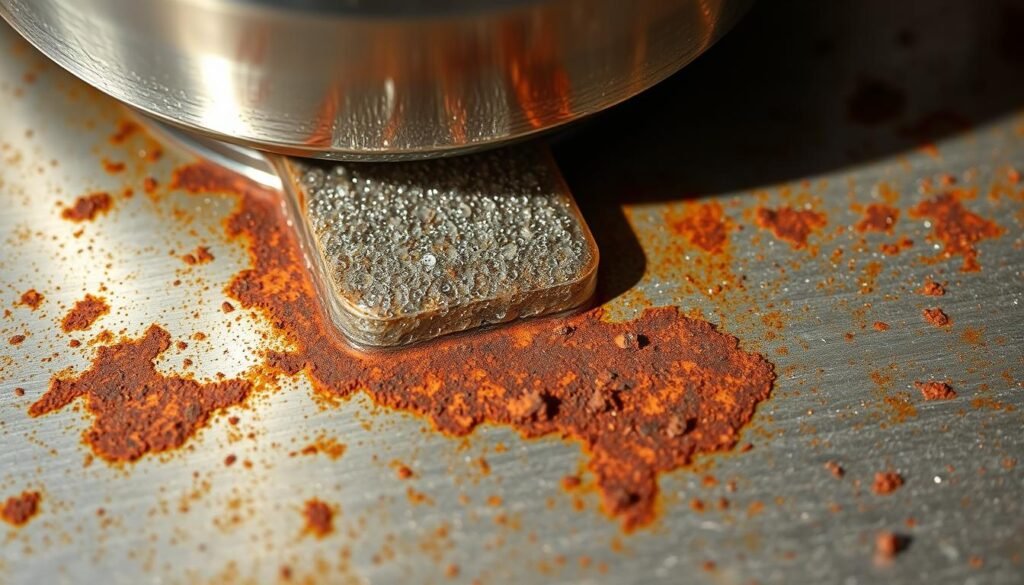
Chemical solutions are often the best way to deal with stubborn rust. They are made to handle severe rust damage that other methods can’t.
Commercial Rust Removers I Trust
I’ve tried several commercial rust removers and they work well. Products with phosphoric acid or citric acid are great. They dissolve rust without harming the metal. For more info, check out ArmorVCI’s guide on industrial rust removal.
How to Use Chemical Solutions Safely
Chemical rust removers are effective but must be used safely. Always wear protective gloves and safety goggles. Make sure the area is well-ventilated to avoid inhaling fumes. Follow the instructions carefully and never mix different chemicals.
Comparing Effectiveness of Different Products
Not all chemical rust removers are the same. Some work better on certain metals or rust levels. When picking a product, think about the metal and rust level. For example, CLR works on many surfaces, while Evapo-Rust is non-toxic. Reading reviews and comparing specs can help you choose.
Abrasive Techniques for Cleaning Metal
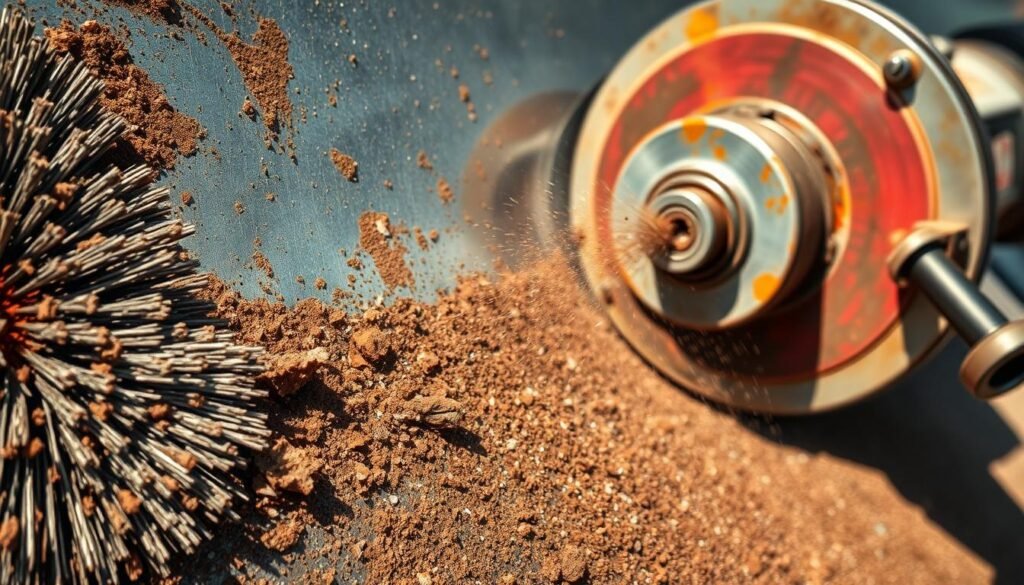
Abrasive methods like sanding and using steel wool are great for removing rust. They work well on tough rust that other methods can’t handle.
Sanding Away the Rust
Sanding is a popular way to get rid of rust on metal. It uses sandpaper or tools to wear away the rust. Start with coarse grit sandpaper and move to finer grits for a smooth finish.
Wear gloves and safety glasses to protect yourself from sanding debris. For big or complex surfaces, power sanding tools can save time and effort. But use them carefully to avoid harming the metal.
Using Steel Wool and Scrubbing Pads
Steel wool and scrubbing pads are also good for rust removal. Steel wool comes in different grades for various tasks. It’s great for tight spaces or odd shapes.
Scrubbing pads work well with cleaning solutions to remove rust. They’re less harsh than sanding but effective when used right. For tough rust, mix a scrubbing pad with a chemical rust remover.
For more info on rust removal, including abrasive methods, check out this resource. It offers a detailed guide on various rust removal techniques.
Prevention: Keeping Metal Rust-Free
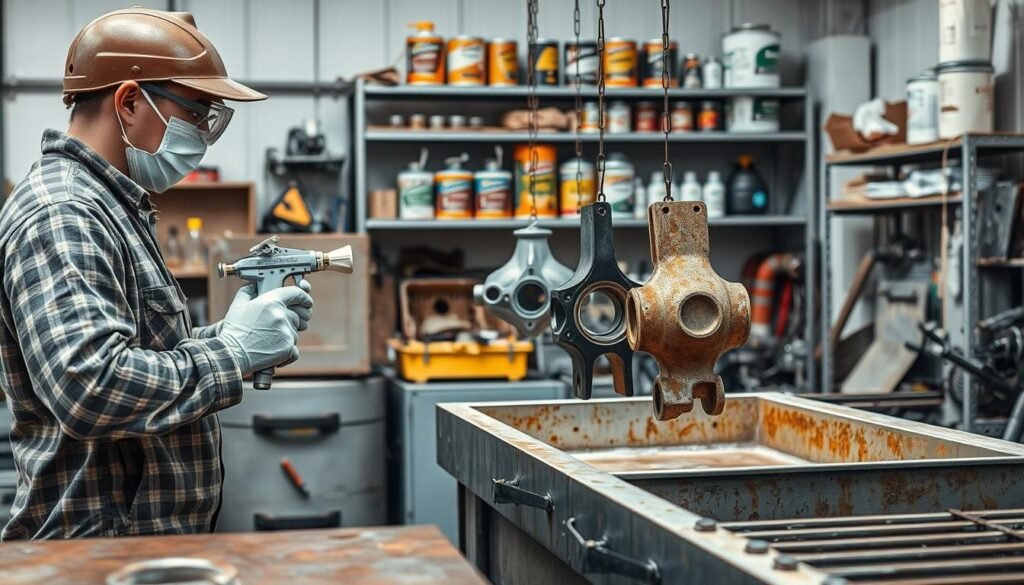
Stopping rust from forming on metal is key to keeping it strong and lasting longer. By acting early, you can lower the chance of rust and avoid expensive fixes.
Protective Coatings to Apply
Using protective coatings is a top way to stop rust. These coatings create a shield, keeping metal dry and safe from rust-causing elements.
- Epoxy Coatings: Known for their durability and chemical resistance, epoxy coatings are a popular choice for protecting metal surfaces.
- Zinc Coatings: Zinc acts as a sacrificial anode, corroding in place of the underlying metal, thus protecting it from rust.
- Polyurethane Coatings: These coatings offer flexibility and UV resistance, making them suitable for outdoor applications.
For more detailed information on rust prevention and removal techniques, visit Unified Alloys’ blog.
The Importance of Regular Maintenance
Regular upkeep is vital to prevent rust. This means checking metal often, cleaning it, and applying protective coatings when needed.
| Maintenance Task | Frequency | Benefits |
|---|---|---|
| Inspecting metal surfaces | Monthly | Early detection of potential issues |
| Cleaning metal surfaces | Quarterly | Removal of dirt and debris that can contribute to rust |
| Applying protective coatings | Annually | Enhanced protection against rust |
Experts say, “Regular maintenance not only extends metal life but also cuts down on expensive repairs later.”
Caring for Metal Surfaces After Rust Removal
After removing rust, it’s time to make the metal shine again. This step is key to keeping your metal looking good and lasting long.
How to Restore the Finish
To restore the finish, start by cleaning and drying the metal. For most metals, a metal polish can bring back the shine. Use a soft cloth to apply the polish in circular motions.
For metals like chrome or stainless steel, use special polishes. Always read the instructions for the best results. Also, for metals that rust easily, a rust-inhibiting coating can help protect them. You can learn more about rust repair and metal care on WD40’s article on rust repair.
Recommended Products for Metal Care
Choosing the right products for metal care is important. For polishing, a mild abrasive product works well. For daily care, a mild soap solution is enough. But for metals in harsh conditions, stronger coatings are needed.
Recommended products include metal polishes, rust-inhibiting sprays, and protective waxes. Pick a product based on the metal type and its use. Stainless steel and chrome need different care than iron or aluminum. Always check the product label and follow the instructions.
By following these steps and using the right products, you can keep your metal surfaces looking great. Regular care is essential to make your metal items last longer.
Rust Removal for Specific Types of Metal
Knowing the metal type is key to picking the right rust removal method. Each metal reacts differently to rust and how it’s removed.
Cleaning Rust from Iron Surfaces
Iron is often plagued by rust. Begin by brushing off loose rust with a wire brush. Next, use a rust remover solution, like vinegar and water or a commercial product. Always wear gloves and safety glasses to protect yourself.
For heavy rust, sanding might be needed. But be careful not to harm the metal underneath. After removing rust, apply a protective coat to stop it from coming back.
Handling Rust on Stainless Steel
Stainless steel resists rust better than iron but isn’t completely safe. When dealing with rust on stainless steel, be gentle to avoid damage. Clean the area with soap and water, then dry it well. For stubborn rust, try a stainless steel cleaner or a lemon juice and baking soda mix.
“The key to maintaining stainless steel is regular cleaning and drying, as this prevents the formation of rust.” –
Aluminum and Other Alloys: Special Considerations
Aluminum and other alloys need special care when removing rust. Aluminum corrodes, not rusts. Use a soft brush and mild detergent to clean it. Avoid harsh chemicals or abrasive materials to prevent damage.
For other alloys, the cleaning method depends on their type. It’s important to know the alloy and find the right cleaning method. Sometimes, a specific rust remover is needed.
DIY Rust Removal Projects
Removing rust yourself can save money and make you feel proud of your work. It’s great for fixing old tools, making metal furniture new again, or refreshing outdoor decor. Here, you’ll find tips and methods to help you through it.
Restoring Antique Tools
Fixing old tools is a task that needs patience and attention to detail. First, check how bad the rust is and pick the right method to remove it. For tools with a lot of rust, try soaking them in vinegar or a commercial remover.
After soaking, use a soft brush or steel wool to carefully remove the rust. For tools that are more delicate, a gentle cleaner and a soft cloth might be enough.
Once the rust is gone, dry the tool well. Then, apply a rust-preventing coating to keep it safe from rust in the future. This helps keep the tool in good shape and working well.
Rejuvenating Metal Furniture
Metal furniture can make any room look elegant, but rust can ruin it. Start by cleaning the metal to get rid of dirt. Then, use a rust remover that fits the metal type.
For iron or steel, a wire brush or sandpaper can help remove rust. After cleaning, rinse and dry the furniture well. To stop rust from coming back, apply a protective wax or primer. Regular checks and cleanings will keep your furniture looking great.
Reviving Outdoor Metal Decor
Outdoor metal decorations like statues or planters can get rusty from the weather. First, see how bad the rust is. For light rust, try a mix of baking soda and water or lemon juice and salt.
If the rust is worse, you might need a commercial remover. After removing the rust, apply a protective coating to keep it from rusting again. Keeping it clean and maintained will help it stay in good shape.
For more detailed methods on removing rust from metal, you can refer to this guide, which offers a wide range of rust removal techniques.
Understanding When to Seek Professional Help
Trying to remove rust yourself can save money. But, there are times when you need a pro. Removing rust can be tricky, like when it’s deep or covers a lot of area.
Knowing when to ask for help is key. Not every rust job is the same. Some need special tools and skills that DIY folks might not have.
Signs That Require Expert Intervention
Here are signs you should get a pro for rust removal:
- Big rust damage that weakens the metal
- Rust in important or tricky spots, like on machines or electrical parts
- You don’t have the right tools or safety gear
- You’re not sure how to remove the rust
If you see any of these signs, it’s best to get a pro. They have the right tools and know-how to safely remove the rust.
Cost Considerations for Professional Services
The cost to hire a pro for rust removal changes based on several things. These include how much rust there is, what metal it’s on, and where you live.
| Service | Average Cost | Factors Affecting Cost |
|---|---|---|
| Rust removal for small items | $50-$200 | Size and complexity of the item |
| Rust removal for large structures | $500-$2,000+ | Extent of rust damage, accessibility |
| Specialized rust removal services | $100-$1,000+ | Type of metal, required equipment |
When looking at professional rust removal, get quotes from different places. This helps you compare prices and services. Also, check if the provider is qualified and experienced. This ensures you’re getting a good deal.
Frequently Asked Questions About Rust Removal
Rust removal is a common problem many face. Knowing the answers to frequently asked questions can make it easier. It’s natural to wonder about the best methods, potential pitfalls, and how to prevent rust in the future.
Common Rust Removal Myths
One myth is that rust removal is a permanent fix. While effective methods can remove rust, the metal can rust again if not protected. Another myth is that any household cleaner can remove rust; some cleaners can damage the metal surface.
Reality Check: It’s important to know that rust removal is not a one-time fix. Choosing the right cleaning solution for the metal type is also crucial.
How Long Does the Process Take?
The time it takes to remove rust depends on the rust’s severity and the method used. For minor rust spots, it can take just a few minutes to an hour. But for more severe cases, it may take several hours or even days, depending on the remover used.
Tip: Be patient. Rushing the process can lead to incomplete removal or damage to the metal surface.
Can Rust Return After Removal?
Yes, rust can return if the underlying cause is not fixed. Rust forms when moisture and oxygen meet metal. If the metal is not dried and protected after removal, it can rust again.
- Apply a rust-inhibiting coating to protect the metal.
- Regularly inspect and maintain metal surfaces.
- Keep metal surfaces dry and clean.
Understanding these aspects of rust removal helps tackle the issue and keep metal items in good condition.
Sharing My Experience with Rust Removal
Working on many rust removal projects has taught me a lot. I’ve learned the value of patience and the right methods.
Lessons Learned
I’ve faced many challenges, like tough rust stains and fragile metal. I’ve found ways to deal with rust, like using vinegar and baking soda.
Practical Tips
Before starting, I wish I knew to dry metal well to avoid rust coming back. Also, using a protective coating helps metal last longer. I hope these tips help others with rust removal.