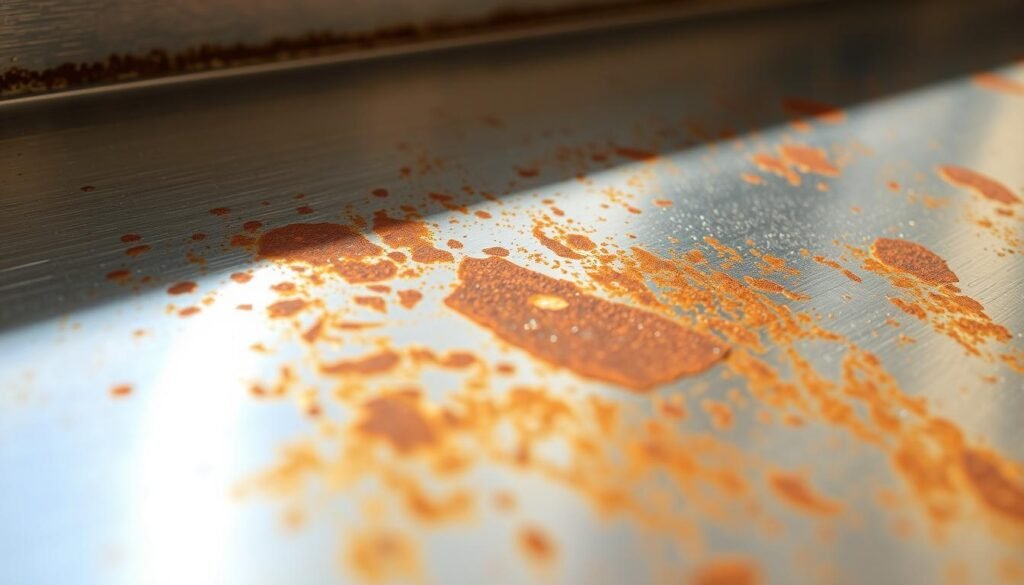
I recently found out that even stainless steel can rust if not cared for. This is a big problem for both homes and businesses. Rust can damage the look and strength of stainless steel surfaces.
Effective cleaning solutions are key to getting rid of rust and keeping stainless steel strong. In this article, we’ll look at the best ways to remove rust and stop it from coming back. We’ll also talk about why it’s important to know about stainless steel and its properties.
Key Takeaways
- Understanding the causes of rust on stainless steel surfaces
- Effective methods for removing rust from stainless steel
- Preventing future corrosion with proper maintenance
- The importance of choosing the right cleaning solutions
- Step-by-step guides for cleaning stainless steel surfaces
Understanding Stainless Steel and Rust Formation
Knowing how stainless steel works is key to stopping rust. This material is strong and fights off corrosion well. But, it’s not completely safe from rust.how-to-clear-cache-on-facebook
What is Stainless Steel?
Stainless steel is made from iron, chromium, and sometimes nickel or molybdenum. Chromium makes it resistant to corrosion by creating a protective oxide layer. This layer, called the passive layer, keeps the metal safe from corrosion.kn-how-to-clean-air-filter
Key properties of stainless steel include:
- High corrosion resistance
- Durability and strength
- Aesthetic appeal
- Low maintenance requirements
How Does Rust Form on Stainless Steel?
Rust appears on stainless steel when its protective layer is broken. This can be due to chemicals, damage, or dirt. When the layer is gone, the metal meets moisture and oxygen, starting rust.
The process involves:
- Damage to the passive layer
- Exposure to corrosive elements
- Initiation of rust formation
Common Causes of Rust on Stainless Steel
Many things can lead to rust on stainless steel. These include chlorides, iron particles, and bad cleaning. For more on rust in stainless steel, check out this resource.
Common causes include:
- Exposure to chlorides or other corrosive substances
- Contamination with iron or other metals
- Physical damage to the surface
- Inadequate cleaning and maintenance
Essential Cleaning Supplies for Rust Removal

Removing rust from stainless steel needs the right cleaning supplies. The tools and materials you use greatly affect the cleaning process.how-to-clean-a-backpack
Mild Abrasives
Mild abrasives are gentle yet effective. Soft-bristled brushes and non-scratch scrubbers are good examples. They help remove rust without harming the surface.
Household Ingredients
Household items can also remove rust. Baking soda and vinegar are popular because they’re safe and work well. A baking soda paste or vinegar soak can dissolve rust.
Specialized Cleaners
For tough rust, you might need specialized cleaners. Rust-removing products are made to tackle rust. Make sure the cleaner is safe for stainless steel to avoid damage.
In summary, the right cleaning supplies are key to removing rust from stainless steel. Choose the right mild abrasives, household items, or specialized cleaners to restore your surfaces.
Step-by-Step Guide to Removing Rust
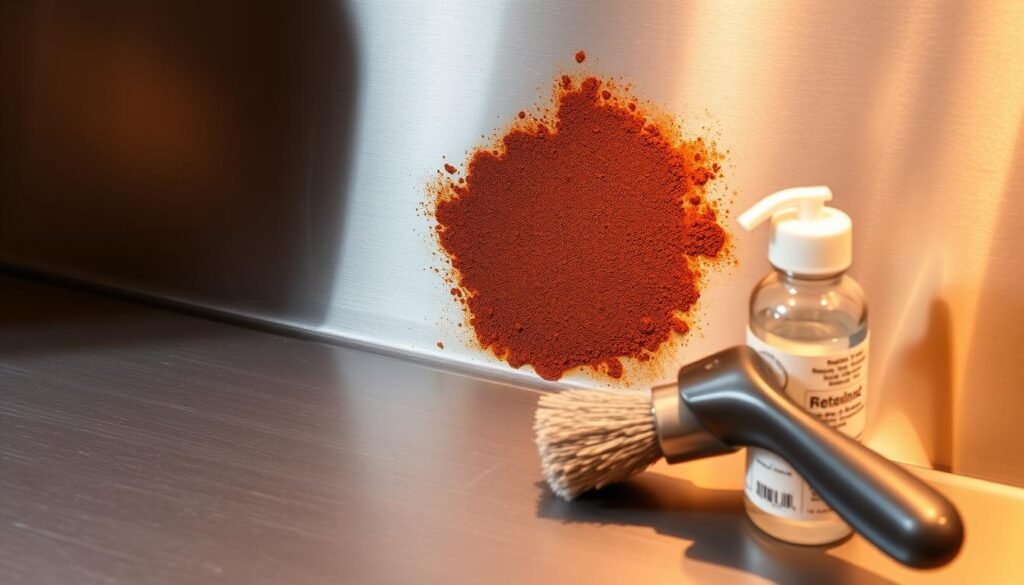
Rust on stainless steel is common but easy to fix. You just need to identify the rusty spots, prepare a cleaning solution, and apply it right.how-to-clean-a-cuisinart-coffee-maker
Inspect and Identify Rusty Areas
Start by thoroughly inspecting your stainless steel for rust. Look for any discoloration or flaking. Check all areas, but pay extra attention to where moisture might gather.
After finding the rusty spots, plan your cleaning. It’s important to cover all areas to avoid future problems.
Prepare Your Cleaning Solution
To clean rust, you’ll need a good solution. A mix of household items often works well. For example, baking soda and water make a paste. For tough rust, a specialized cleaner might be needed. Always test a small area first to avoid damage.
For a natural option, try a vinegar and baking soda mix. It’s effective and safe for surfaces.
Apply and Scrub the Rust
Now, apply your cleaning solution to the rusty area with a soft cloth or sponge. Scrub gently in the steel’s grain direction to avoid scratches. For hard spots, you might need to scrub harder or let the solution sit before scrubbing.
After scrubbing, rinse with warm water and dry with a clean towel. Check again to make sure all rust is gone.how-to-clean-a-dogs-ears
Using Natural Remedies to Combat Rust
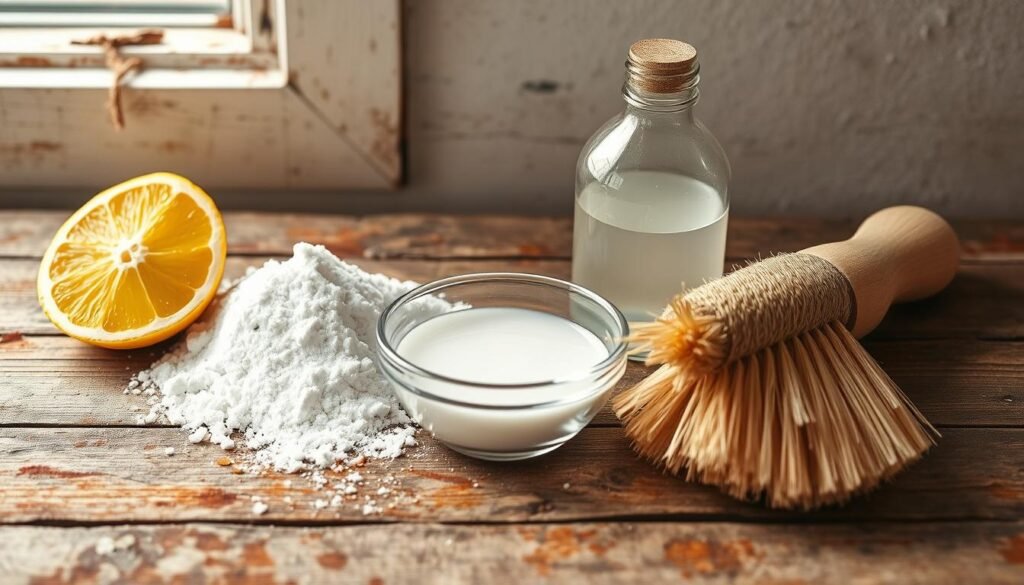
Natural remedies are a gentle way to fight rust on stainless steel. They are safe for the planet and for you.
Vinegar and Baking Soda Solution
A mix of vinegar and baking soda is a common solution for rust. Vinegar’s acid breaks down rust, and baking soda gently removes it. Mix equal parts of both to make a paste.
Put the paste on the rusty spot and wait for 30 minutes. Then, clean it with a soft cloth or sponge and rinse with warm water. For more tips, check out This Old House.
Lemon Juice and Salt Paste
A lemon juice and salt paste is also effective. Lemon’s acidity dissolves rust, and salt gently scrubs. Mix lemon juice and salt to make a thick paste, then apply it to the rust.how-to-clean-a-down-comforter
Wait an hour before gently scrubbing with a soft brush and rinsing with warm water.
Olive Oil for Protection
Protecting stainless steel after removing rust is key. Olive oil creates a protective layer. Just apply a thin layer of olive oil and buff with a soft cloth.
| Natural Remedy | Ingredients | Application |
|---|---|---|
| Vinegar and Baking Soda | Vinegar, Baking Soda | Apply paste, let sit for 30 minutes, scrub and rinse |
| Lemon Juice and Salt | Lemon Juice, Salt | Apply paste, let sit for 1 hour, scrub and rinse |
| Olive Oil Protection | Olive Oil | Apply thin layer, buff with soft cloth |
These natural remedies can remove rust from stainless steel and keep it looking great.
When to Use Chemical Cleaners
When dealing with tough rust on stainless steel, chemical cleaners are often needed. Natural methods work well, but sometimes, a stronger solution is required. Chemical cleaners can be very effective, but use them wisely.
Choosing the Right Chemical Cleaner
Choosing the right chemical cleaner can be tough. Look for products made for removing rust from stainless steel. Always read the label carefully and check for certifications. Consider these factors when picking a cleaner:how-to-clean-a-dryer/
- The type of rust or stain you’re dealing with
- The surface finish of your stainless steel
- Any environmental or health concerns
As Consumer Reports notes, “The best rust removers are those that effectively remove rust without damaging the underlying surface.”
“The key to successful rust removal is choosing the right cleaner for the job.”
Safety Precautions for Chemical Use
When using chemical cleaners, safety comes first. Wear protective gear, including gloves, goggles, and a mask, to avoid irritation and inhaling fumes. Make sure the area is well-ventilated and follow the instructions for use and disposal.
Proper Application Techniques
To get the best results from your chemical cleaner, follow these steps:
- Apply the cleaner to the rusty area using a soft cloth or brush.
- Let it sit for 15 minutes to an hour, as recommended.
- Gently scrub the area with a non-abrasive scrubber.
- Rinse well with warm water and dry with a clean towel.
By following these steps and taking the necessary safety precautions, you can effectively remove rust from your stainless steel surfaces using chemical cleaners.
Preventing Rust on Stainless Steel Surfaces
Keeping stainless steel from rusting is key to its lasting beauty and strength. We’ve talked about why rust happens and how to clean it. But, stopping rust before it starts is just as vital.
Regular Cleaning Best Practices
Cleaning stainless steel often is the best way to fight rust. Use mild soap and water to wipe away dirt and grime. Make sure to dry it well to avoid water spots that can lead to rust.
Choosing the right cleaning tools is important too. Use soft cloths or sponges to avoid scratches. Stay away from harsh cleaners or scrubbers that can harm the steel and increase rust risk.how-to-clean-lvp-flooring
Applying Protective Coatings
Adding a protective coating can add an extra layer of protection against rust. There are many coatings like waxes and oils for stainless steel. These not only protect but also make the steel look better.
It’s crucial to pick a coating that fits your needs. For kitchen use, make sure the coating is safe for food. Always read and follow the manufacturer’s application instructions for the best results.
Environmental Considerations
The environment where stainless steel is used can affect its rust risk. High humidity, salt exposure, and extreme temperatures can cause rust. Knowing these factors helps you take the right steps to prevent rust.
“The key to preventing rust is understanding the conditions that lead to its formation and taking proactive steps to mitigate those conditions.”
In tough environments, like coastal areas with lots of salt in the air, cleaning more often and using protective coatings is even more important.
How to Maintain Your Stainless Steel After Cleaning
To keep your stainless steel looking great, regular care is key after cleaning. Taking care of your stainless steel surfaces keeps them looking good and lasting longer.
Daily Maintenance Tips
Keeping your stainless steel clean every day is easy. Just wipe it down with a soft cloth and some mild soap. This helps get rid of fingerprints and splatters that can cause grime to build up.
- Use a microfiber cloth to avoid scratching the surface.
- Avoid using abrasive cleaners or scrubbers that can damage the finish.
- Dry the surface thoroughly to prevent water spots.
As Consumer Reports says, “Regular cleaning with the right materials can significantly reduce the risk of rust and maintain the appearance of stainless steel.”how-to-clean-leather-shoes
Seasonal Deep Cleaning
While daily care is important, deep cleaning a few times a year is also crucial. This deeper clean gets rid of tough grime or stains that daily cleaning might miss.
- Mix a solution of equal parts water and white vinegar.
- Apply the solution to the stainless steel surface and let it sit for a few minutes.
- Scrub gently with a soft-bristled brush, then rinse and dry thoroughly.
| Season | Cleaning Task |
|---|---|
| Spring | Deep clean to remove winter grime |
| Summer | Focus on removing grease and food residue |
| Fall | Clean and prepare for winter |
| Winter | Protect against salt and moisture damage |
Handling Scratches and Damage
Scratches and damage can happen, even with good care. It’s important to fix these problems quickly to stop them from getting worse.
For minor scratches, use a stainless steel cleaner and a soft cloth to buff out the scratch. For deeper scratches or damage, consider consulting a professional for repair or replacement.
“The longevity of stainless steel is directly related to how well it’s maintained. Regular care can prevent many issues that lead to costly repairs or replacements.” –
By following these maintenance tips, you can enjoy the beauty and durability of your stainless steel surfaces for years to come.
Troubleshooting Common Issues
Removing rust from stainless steel is more than just cleaning. It also means solving common problems. I’ve talked about different ways to remove rust before. But sometimes, you might face stubborn rust spots or discoloration.
Stubborn Rust Spots
Dealing with stubborn rust spots can be tough. When you find these spots, stay away from harsh chemicals or abrasive materials that could harm the steel. Instead, try cleaning again with a soft abrasive or a rust remover made for this purpose. For more tips, check out surprising ways to clean rust off stainless.
Discoloration After Cleaning
Seeing discoloration after cleaning is a worry. This might happen if the cleaning solution or method was not right. To fix this, make sure you’re using a cleaning solution that’s good for stainless steel. If the discoloration doesn’t go away, try using a stainless steel polish to get back the original shine.
How to Safely Use Steel Wool
Steel wool is great for removing rust, but you have to use it right. Always pick the finest grade of steel wool to avoid scratching. Also, use steel wool with a gentle cleaning solution to protect the stainless steel. As
“The key to successful rust removal is patience and the right tools.”
, using steel wool correctly is key.
Knowing how to handle common problems helps keep your stainless steel surfaces looking good and rust-free.
FAQs About Rust on Stainless Steel
Learning about rust on stainless steel can ease worries and make upkeep easier. We’ll cover the most asked questions to help you understand how to handle rust well.
Can Rust Ruin Stainless Steel?
Rust on stainless steel isn’t as bad as on other metals, but it’s still a problem if ignored. Stainless steel is made to fight off corrosion thanks to chromium. But, rust can happen when exposed to saltwater or high humidity. Rust might not harm stainless steel, but it can cause discoloration and damage if not cleaned right.
Is Rust on Stainless Steel Dangerous?
Rust on stainless steel is usually safe. It’s often used in places like kitchens and hospitals because it’s safe and stops bacteria. The rust on stainless steel is mostly on the surface and doesn’t usually harm health. Still, it’s important to clean and care for stainless steel often to avoid problems.
How Often Should I Clean Stainless Steel?
Cleaning stainless steel depends on where it’s used and how often it’s touched. For busy areas or places with lots of moisture, you might need to clean it every day. In less busy spots, cleaning once a week or every two weeks is enough. Cleaning regularly keeps stainless steel looking good and stops rust from forming.
By knowing the answers to these questions, you can handle rust on stainless steel better. Keeping it clean and using the right methods is crucial for its look and durability.
Final Thoughts on Keeping Stainless Steel Rust-Free
As we wrap up our guide on removing rust from stainless steel, remember that regular upkeep is crucial. The look and life of stainless steel depend a lot on how well you take care of it.
The Importance of Regular Maintenance
Regular care not only keeps stainless steel looking great but also stops rust. Simple cleaning habits can make your stainless steel last longer.
Daily Maintenance Tips: Clean surfaces with a soft cloth, use mild soap and water, and dry them well to avoid water spots.
Embracing Preventative Measures
Preventative steps are key to keeping stainless steel rust-free. This includes using protective coatings, watching out for rust-causing environments, and fixing any damage quickly.
| Preventative Measure | Benefit |
|---|---|
| Applying Protective Coatings | Creates a barrier against moisture and contaminants |
| Regular Cleaning | Removes dirt and grime that can lead to rust |
| Environmental Considerations | Reduces exposure to elements that can cause rust |
Enjoying the Beauty of Stainless Steel
By following the tips in this article, you can keep stainless steel beautiful and durable for years. Keeping stainless steel clean and rust-free not only makes your place look better but also makes it healthier. It reduces bacteria and other harmful stuff.
The benefits of maintaining stainless steel are many, from its shiny look to its lasting quality. With regular care, your stainless steel will stay valuable and attractive for a long time.
Additional Resources for Stainless Steel Care
Keeping stainless steel surfaces clean needs the right tools and knowledge. I’ve gathered a list of useful resources to help you maintain your stainless steel.
Reliable Cleaning Solutions
For effective cleaning, look into products from trusted brands like Bar Keepers Friend or CLR. These are made to remove rust and grime without harming the stainless steel.
Informative Online Content
YouTube and home maintenance blogs are full of helpful information on stainless steel care. You can find tutorials and videos that show cleaning methods and offer maintenance tips.
Community Support
Joining online forums or groups focused on home maintenance is very helpful. These places let you connect with others who face similar challenges. You can get valuable advice and support.