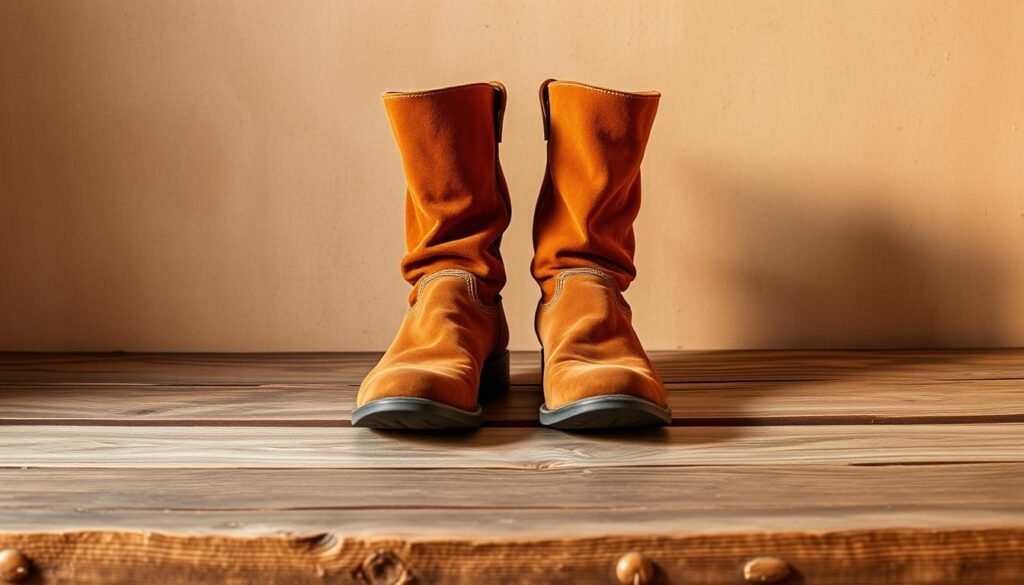
Surprising fact: a single drop of oil can mark a suede shoe forever, and suede loses color faster than smooth leather when mistreated.
I wear square toe cowboy suede often, and its velvety nap draws dirt, moisture, and oil fast. I learned that soaking is a trap; excess water warps the fibers and ruins fit.
My toolkit is simple: a suede brush, eraser, a clean cloth, white vinegar or rubbing alcohol, and a protector spray. I always let my pairs dry naturally, away from heat and sunlight.
I start by brushing with the nap, use an eraser on scuffs, then dab stubborn stains lightly with vinegar or alcohol. A final spray seals the work and helps repel future messes.
I stick to small steps and patient hands. That slow process keeps my favorites in rotation and extends their life without risking the texture or color.
Key Takeaways
- Use low moisture and light pressure when treating delicate suede.
- Brush in the nap first, then erase scuffs, and spot-treat stains gently.
- Avoid soaking, machines, heat, and direct sun at all costs.
- Keep a basic kit on hand: brush, eraser, cloth, vinegar/alcohol, and protector.
- For detailed tips, see this helpful guide from Vogue for suede shoe care: suede shoe advice.
Why Suede Boots Need Special Care
Suede comes from the underside of animal hide, not the outer grain. That split leather is softer and thinner than full-grain leather.how-to-clean-a-mouse-pad
The nap varies by animal. Sheepskin yields a delicate pile, while cowhide gives a tougher texture. I treat each pair with pressure that matches the material.
Water is the main enemy. Excess moisture can leech oils, stiffen fibers, or cause shrinkage. I never soak a pair or use a washing machine after a spill.
Heat and direct sunlight can dry and warp the nap. I always blot puddles, let them air at room temperature, then proceed with gentle cleaning for stains.
“Regular, light brushing keeps dust and dirt from settling deep and makes later care far easier.”
- Brush lightly to lift dust before stains embed.
- Air-dry at room temperature—avoid hair dryers and radiators.
- Address salt from snow only after boots are fully dry.
My Suede-Cleaning Setup: Tools, Products, and Prep
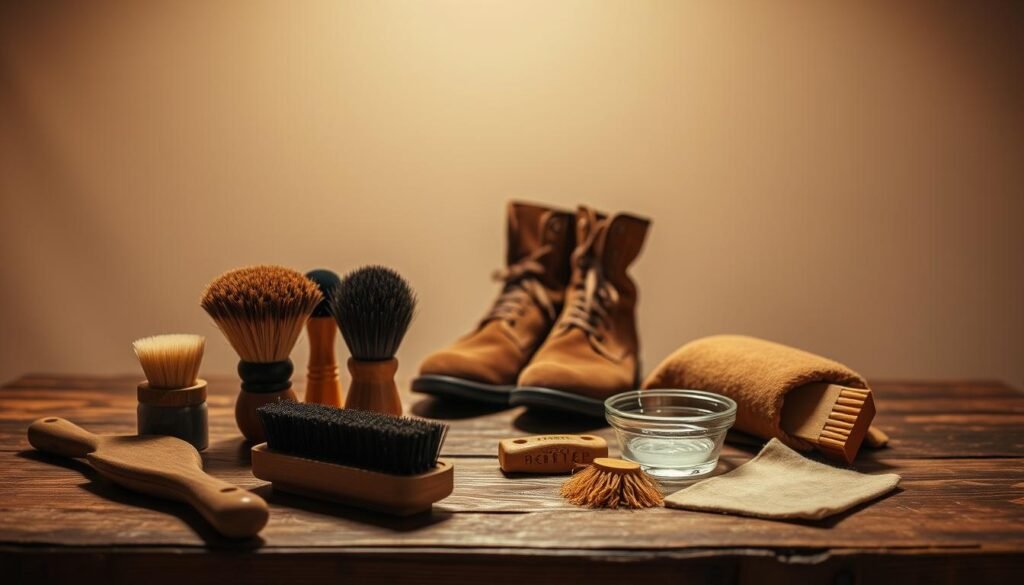
I begin every session by arranging my brush, eraser, cloth, and products within easy reach. A calm setup saves mistakes and speeds the process.how-to-clean-a-mousepad
Essential kit: I keep a suede brush, a suede eraser, a clean cloth, white vinegar or rubbing alcohol, a suede cleaner when I need it, and a protector spray. Cedar shoe trees are my go-to for moisture and shape.
- I remove laces and insert shoe trees or crumpled paper so the boot keeps its shape.
- I set a tidy workspace on newspaper or a towel to catch dirt and crumbs.
- I always check dry time before starting; working on damp fabric grinds dirt deeper.
- I dampen the cloth lightly for spot work — never soak — and brush gently in the nap’s direction.
“A light touch with the right tools protects the nap and lengthens the life of the leather.”
| Item | Use | Notes |
|---|---|---|
| Suede brush | Lift nap and remove surface dirt | Soft-bristle for delicate pairs |
| Suede eraser | Rub scuffs and marks | Short, firm strokes; avoid overworking |
| Clean cloth & vinegar | Dab tough spots | Lightly dampen; blot, then air dry |
| Protector spray | Seal and repel future dirt | Apply only when fully dry |
For more tips on treating your pair, I also reference a trusted suede boots care guide.
How to clean suede boots
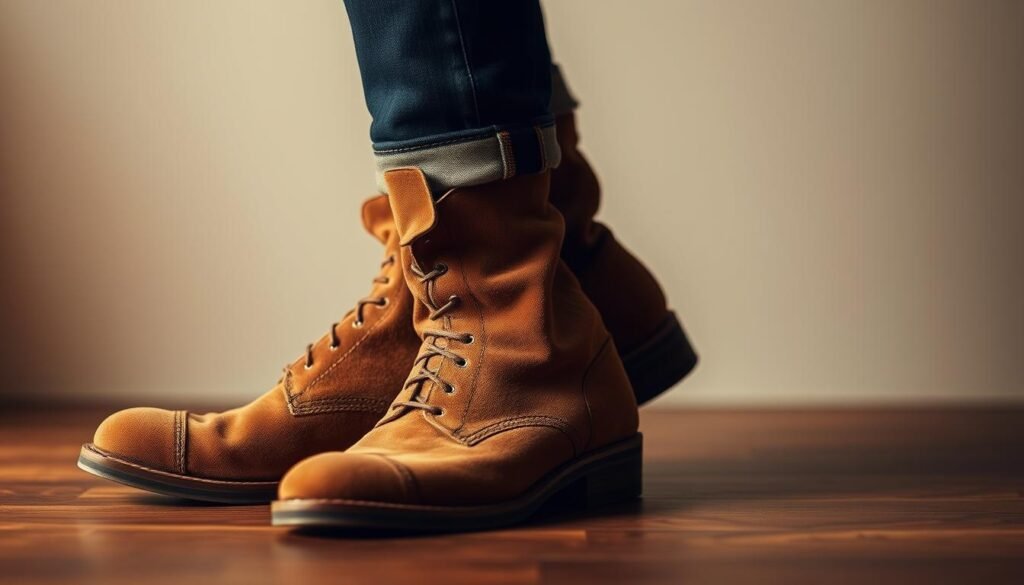
I begin every refresh by letting each pair sit at room temperature until fully dry; patience pays off. Avoid heat and direct sunlight, since forced drying can warp the nap and set marks.
I brush off dust and surface grime with a suede brush, moving gently with the nap. When fibers look flat, I add slightly more pressure on scuffed zones to revive texture.
For stubborn scuffs, I use a suede eraser. I rub just enough to lift the mark, then brush again so the pile blends evenly.
If a stain won’t budge, I dab a clean cloth with white vinegar or rubbing alcohol and work the spot lightly. I repeat patiently, avoiding saturation, and always let the area air-dry.
Water marks get a light spritz and a gentle outward brush, then a blot with a dry cloth. Once the leather is fully dry, I fluff the nap in multiple directions.how-to-clean-a-fish-tank
“Slow, steady steps protect the texture and keep color even.”
- Spot-shave stringy fuzz with a clean razor if needed, then re-brush.
- Finish by applying an even coat of suede protector spray when completely dry.
How I Remove Tough Stains on Suede Boots
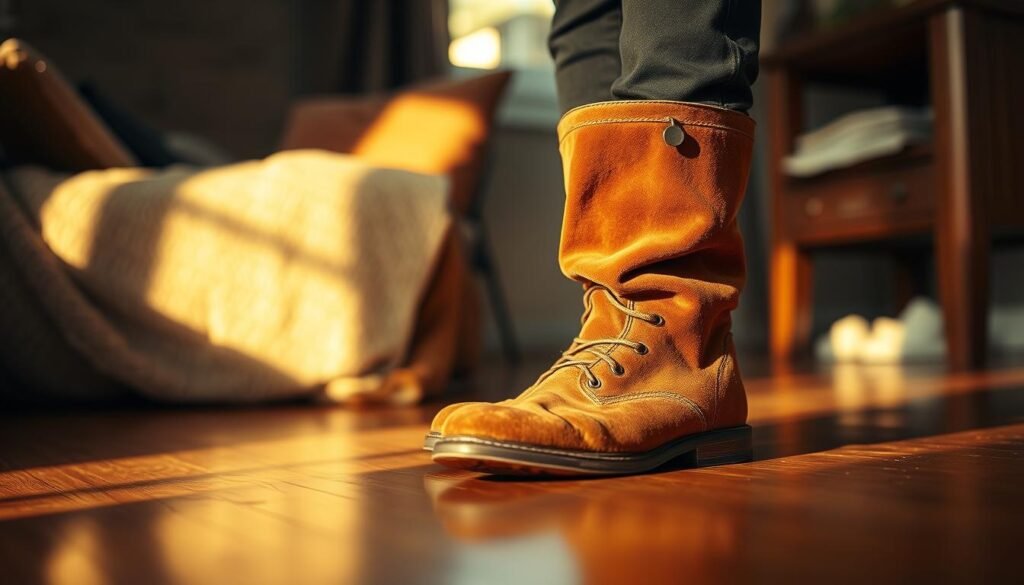
Stains that won’t budge test patience, so I rely on absorbents and light motion rather than force.
Oil and grease: I blot immediately, then cover the spot with baking soda or cornstarch. I let it sit for several hours or overnight, then brush gently and repeat if needed.
Salt rings: I brush off crystals first. Next I blot with cold water mixed with a tiny drop of dish soap until the halo fades, and I let the pair air-dry.
Water spots: A very light mist evens moisture. I brush with the nap, blot excess with a clean cloth, then let the leather dry naturally.
- Blood: Dab lightly with hydrogen peroxide on a cotton ball; keep treatments small and controlled.
- Ink: Absorb wet ink fast, then use rubbing alcohol sparingly once dry, followed by a suede eraser and a quick brush.
Repeat gentle steps rather than soaking; patient care protects the nap and helps remove stains without harm.how-to-clean-keurig-with-vinegar
Suede Care Habits That Keep My Boots Looking New
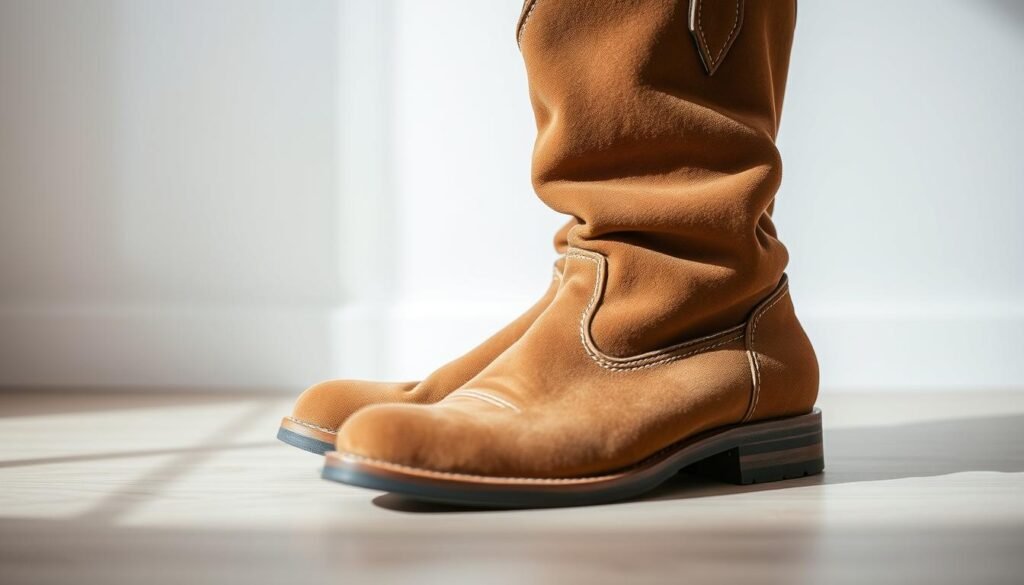
A quick sweep with a soft brush stops dust from settling into the pile. I make a small after-wear routine that takes under a minute and saves me time later.
After-wear routine: quick brush on toes and heels
I brush the toe and heel for one minute after each outing. That light motion removes surface dirt and restores the nap without pressure.
Deep clean cadence and when to re-apply protector
I schedule a deeper refresh every couple of months for pairs I wear often. I re-apply a suede protector spray after that deep check, or sooner if water stops beading on the surface.
Storage smarts: cedar shoe trees, dust bags, and dry-before-storing
I only store leather boots when fully dry. Cedar shoe trees keep shape and draw moisture, and dust bags limit dust and sunlight exposure.
What not to do: soaking, harsh chemicals, heat, or washing machines
Never soak or use a washing machine. Avoid harsh chemicals and heat devices; those choices shrink nap and harm leather. I keep a dedicated cleaner and brush by my door so maintenance becomes automatic.
“Small habits protect shape and color over time.”
Conclusion
My final step is simple: dry fully, brush gently with a suede brush, and finish with a light protector spray. This small process keeps dirt and dust from settling and helps remove stains before they set.
I keep a cloth, a mild cleaner or suede cleaner, and baking soda on hand. For oil or grease I use absorbents; for salt after snow I blot and treat with a touch of cold water and dish soap. White vinegar handles stubborn marks in small doses.
Avoid soaking, heat, and washing machines. A patient, repeatable step sequence saves time and keeps my cowboy boots and everyday pairs looking fresh for longer.