A stainless steel sink is a key part of many kitchens. But, it can get dull and stained if not cared for. A dirty sink can also be a health risk because it can harbor bacteria.
Keeping your stainless steel sink clean is important for looks and health. In this article, I’ll share easy tips for keeping your stainless steel sink clean. I’ll also show you the best ways to get rid of stains and grime.
Key Takeaways
- Effective methods for cleaning a stainless steel sink
- Tips for removing stubborn stains and grime
- The importance of regular maintenance
- Simple DIY cleaning solutions
- Best practices for keeping your sink spotless and shiny
Why Cleaning Your Stainless Steel Sink is Important
A clean stainless steel sink is not just pretty; it’s key for kitchen cleanliness. Regular cleaning keeps your sink in top shape. It remains a valuable part of your kitchen.
Benefits of a Clean Sink
Keeping your sink clean has many advantages. It makes your kitchen look welcoming and neat. A clean sink also keeps bacteria and germs away, preventing illness.how-to-clean-keurig-with-vinegar
Regular cleaning also protects your sink from damage. It prevents scratches and stains that can harm its surface over time.
| Benefits | Description |
|---|---|
| Aesthetic Appeal | Enhances the overall look of your kitchen |
| Hygiene | Prevents the buildup of bacteria and germs |
| Durability | Maintains the sink’s surface, preventing scratches and stains |
Preventing Stains and Pitting
Stainless steel sinks can stain and pit if not cared for. Regular cleaning stops these problems by removing harmful substances. It’s important to use the right cleaning products and methods.
Maintaining Hygiene
Kitchen sinks are hotspots for bacteria because of food and water. Cleaning your stainless steel sink often is crucial for hygiene. It’s not just about looks; a clean sink is vital for health and safety.
By making sink cleaning a part of your daily routine, you keep your kitchen healthy. Simple actions like wiping down the sink after use and deep cleaning it weekly can greatly help.
Essential Cleaning Supplies You’ll Need
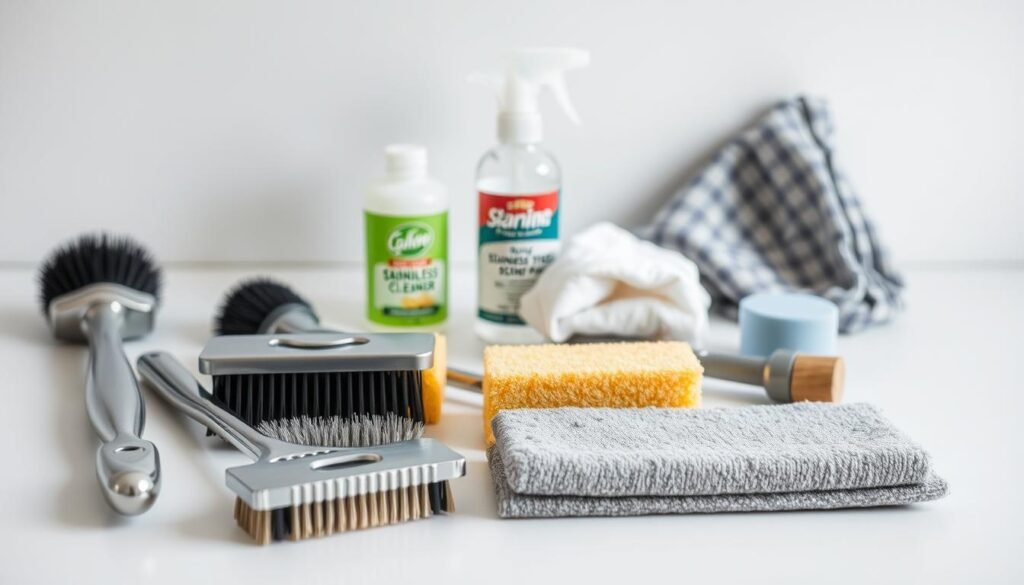
To make your stainless steel sink shine, you need the right tools and materials. Start by gathering a few key supplies that are safe and work well on stainless steel.
Recommended Cleaners
Choosing the right cleaner is crucial for a clean sink. Look for non-toxic and gentle cleaners made for stainless steel. Stay away from harsh chemicals or abrasive cleaners that can harm the surface. For reliable options, check out This Old House for recommendations.how-to-clean-leather
Some top picks include:
- Mild dish soap
- White vinegar
- Baking soda
- Specialized stainless steel cleaners
Non-Abrasive Scrubbers
Using non-abrasive scrubbers is key to avoid scratching your sink. Soft-bristled brushes or scrubbers from silicone or nylon work great. They clean well without harming the sink.
| Scrubber Type | Material | Effectiveness |
|---|---|---|
| Soft-bristled brush | Nylon | High |
| Silicone scrubber | Silicone | Medium |
| Non-abrasive sponge | Cellulose | High |
Microfiber Cloths
Microfiber cloths are essential for drying and polishing your sink. They are gentle on surfaces and great at removing water spots and streaks. Use a microfiber cloth to dry and buff your sink for the best look.
“A clean sink is not just about aesthetics; it’s also about hygiene. Regular cleaning with the right supplies can prevent the buildup of bacteria and grime.”
With the right cleaning supplies, you can keep your stainless steel sink clean, shiny, and hygienic.
Step-by-Step Guide to Cleaning Your Sink

To keep your stainless steel sink spotless, it’s key to know the step-by-step cleaning process. This guide will show you how to keep your sink shiny and clean.
Initial Rinse and Wipe Down
Start by rinsing your sink with warm water to get rid of loose dirt. Use a microfiber cloth to wipe it down. It’s soft on the surface and good at picking up dirt. For more tips, check out Young House Love.
Applying Cleaner
After rinsing, put on a cleaner. You can use a store-bought one or a homemade mix. Homemade cleaners often use baking soda or vinegar. They’re good and eco-friendly. Make sure to spread the cleaner all over the sink.
Scrubbing Techniques
Let the cleaner work for a few minutes. Then, use a soft sponge or non-abrasive scrubber to gently scrub. Scrub in the direction of the grain to avoid scratches. Don’t use harsh materials or scrub against the grain.
Some important scrubbing techniques include:
- Always scrub in the direction of the grain to avoid scratches.
- Use gentle circular motions for stubborn spots.
- Rinse your scrubber often to stop grime from spreading.
By following these steps and techniques, you can keep your stainless steel sink clean and shiny.
Homemade Cleaning Solutions for Your Sink
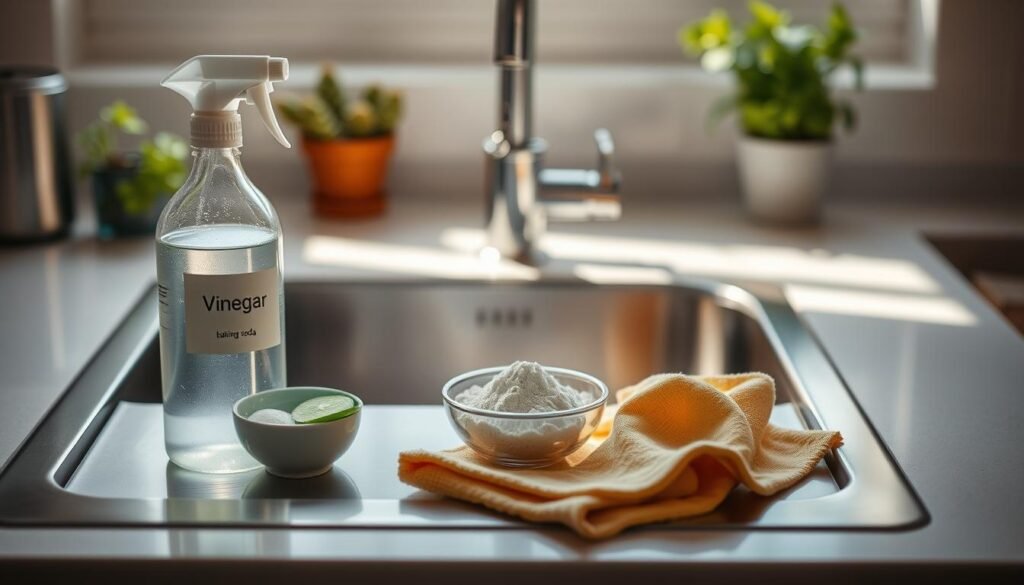
You can make your stainless steel sink shine with simple, green ingredients. These homemade cleaners cut down on harsh chemicals and save money. They help keep your sink looking new.
Baking Soda Paste
A baking soda paste is a top choice for cleaning. Mix baking soda with a bit of water to make a thick paste. Spread this paste on the sink and scrub with a soft sponge. Baking soda gently removes stains without harming the sink.
Vinegar and Olive Oil Mix
A vinegar and olive oil mix is also great. Vinegar breaks down tough stains, and olive oil protects the sink. Mix equal parts in a spray bottle. Spray and wipe with a microfiber cloth. This method cleans and polishes the sink.
Lemon Juice Application
Lemon juice is another natural cleaner for your sink. Its acidity dissolves mineral deposits and stains. Just rub a cut lemon on the sink. For stubborn stains, let it sit a bit before rinsing.
| Cleaning Solution | Ingredients | Benefits |
|---|---|---|
| Baking Soda Paste | Baking Soda, Water | Natural abrasive, removes stains |
| Vinegar and Olive Oil Mix | Vinegar, Olive Oil | Breaks down stains, leaves protective layer |
| Lemon Juice | Lemon | Dissolves mineral deposits, natural disinfectant |
These homemade cleaners are not just good for your sink. They’re also kind to the planet. Using them keeps your sink clean and your family and the environment safe from harsh chemicals.
Tips for Dealing with Stubborn Stains
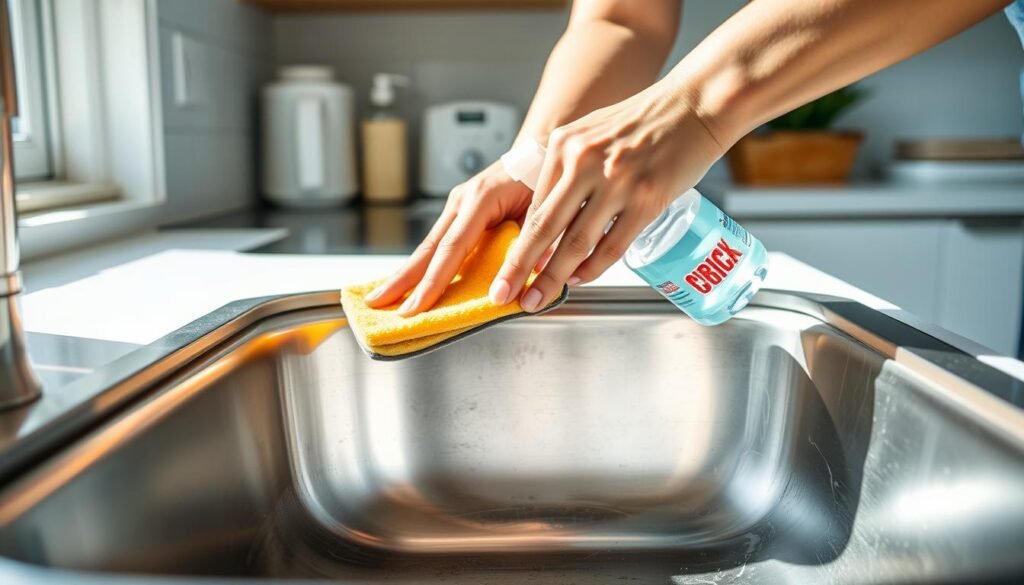
Stubborn stains on your stainless steel sink can be tough to handle. But, there are ways to get rid of them. I’ll share some tips to help you make your sink shine again.
Removing Hard Water Spots
Hard water spots are hard to remove, but vinegar and water can help. Just apply the mix, wait a few minutes, and then scrub with a soft scrubber.
Tip: For tough spots, try a product made for mineral deposits.
Treating Rust Stains
Rust stains are ugly, but they can be fixed. A baking soda and water paste works well. Apply it, wait 30 minutes, scrub, and then rinse.
Important: Don’t use harsh materials that can scratch the sink.how-to-clean-rust-off-metal
Tackling Grease Buildup
Kitchens often have grease buildup, including on stainless steel sinks. Use a degreaser or mix water and white vinegar. Spray, wait a bit, and then clean with a microfiber cloth.
| Stain Type | Recommended Solution | Scrubbing Method |
|---|---|---|
| Hard Water Spots | Vinegar and Water | Non-abrasive scrubber |
| Rust Stains | Baking Soda Paste | Gentle scrubbing |
| Grease Buildup | Degreaser or Vinegar Solution | Microfiber cloth |
Best Practices for Regular Maintenance
Keeping your stainless steel sink shiny and clean is easy with a few simple steps. Regular care not only makes your sink look great but also extends its life. It prevents grime and stains from building up.
Daily Cleaning Routine
It’s important to clean your sink every day. Rinse it with warm water after each use to remove debris. Then, use a microfiber cloth and mild detergent to wipe it down. Focus on the drain and faucet, where grime often gathers.
Tip: For a brighter shine, dry your sink with a clean, dry microfiber cloth after cleaning.
Weekly Deep Cleaning Tips
Deep cleaning once a week helps remove tough stains and grime. Make a paste with baking soda and water, and apply it to the sink. Let it sit for 15-30 minutes, then scrub gently with a soft scrubber and rinse well.
As noted by cleaning experts, “Regular deep cleaning can significantly reduce the appearance of stains and scratches on stainless steel sinks.”
“A clean sink is not just about aesthetics; it’s also about hygiene. Regular cleaning prevents the buildup of bacteria and grime.”
Avoiding Common Mistakes
Don’t make the mistake of using harsh cleaners or scrubbers, as they can scratch your sink. Instead, use gentle cleaners and soft cloths or sponges.
- Always rinse your sink thoroughly after cleaning to prevent soap residue buildup.
- Avoid leaving standing water in your sink, as it can lead to mineral deposits and stains.
- Regularly clean the sink’s drain and garbage disposal to prevent odors and grime accumulation.
By following these maintenance tips, you can keep your stainless steel sink looking shiny and new for years.
How to Polish Your Stainless Steel Sink
To give your kitchen a professional look, learning to polish your stainless steel sink is key. Polishing not only makes your sink look better but also protects it from stains and scratches.
Selecting the Right Polish
Choosing the right polish for your stainless steel sink is important. Look for a polish made for stainless steel. Some good options include:
- Stainless steel polishes in spray or cream form
- Products with mild abrasives to remove scratches
- Polishes with a protective coating to prevent stains
When picking a polish, think about your sink’s finish. Some polishes are made for brushed or mirror-like finishes.
Applying Polish Effectively
After choosing the right polish, it’s time to apply it. Here’s how:
- Read the polish instructions carefully
- Put a small amount of polish on a soft, microfiber cloth
- Gently rub the polish on the sink in a circular motion
- Make sure to cover the whole surface evenly
Tip: Don’t use too much polish, as it can leave residue.
Final Buffing Techniques
After applying the polish, buff the sink to a high shine. Use a clean, dry microfiber cloth to buff in a circular motion. This removes excess polish and gives a sparkling finish.how-to-clear-the-codes-of-a-check-engine-light
By following these steps, you can get a beautifully polished stainless steel sink. It will make your kitchen look great.
When to Seek Professional Help
At times, you might need professional help to fix your stainless steel sink. Regular upkeep can stop many problems. But, some issues are too tough for DIY fixes.
Signs of Deep Damage
Knowing when your sink needs more than a simple clean is key. Look out for deep scratches, rust, or stains that won’t go away with common cleaners.
- Deep scratches that expose the underlying metal
- Rust spots or corrosion
- Significant staining or discoloration
A pro says, “Ignoring these signs can lead to further damage. This makes cleaning harder and could cost a lot to fix.”
“A stainless steel sink is a big investment for your kitchen. When it shows wear, act fast to keep it in good shape.”
Choosing a Professional Service
Choosing the right service for your sink is crucial. Look for those with experience in sink cleaning or restoration. Check reviews, ask for referrals, and make sure they use the right tools.
| Criteria | What to Look For |
|---|---|
| Experience | Find services with a good track record in stainless steel sink restoration |
| Reviews | Look at online reviews and ask for referrals to see how satisfied others are |
| Techniques & Equipment | Make sure they use safe, effective methods and tools |
Costs to Consider
The cost of professional help varies. It depends on the damage, the service’s skill, and where you are. Expect to pay between $100 to $500 on average.
To save money, fix problems early and keep your sink clean. Regular care keeps it looking great and avoids expensive fixes.
Creative Uses for Your Stainless Steel Sink
A stainless steel sink is more than just for washing dishes. It can be used in many creative ways to make your kitchen better. Learning how to clean and use it can unlock its full potential.
Beyond the Basics
You can turn your stainless steel sink into a planter for herbs or a kitchen island centerpiece. Fill it with ice and place drinks or desserts inside for a unique display. This adds beauty and shows the sink’s versatility.
Design Integration
Make your stainless steel sink a key part of your kitchen’s design. Pair it with a stylish faucet and matching countertops for a cohesive look. This makes your sink a standout feature in the kitchen.
Alternative Uses
Stainless steel sinks are great for cleaning things other than dishes, like gardening tools or outdoor gear. Its material and design make it perfect for different tasks, boosting its usefulness.